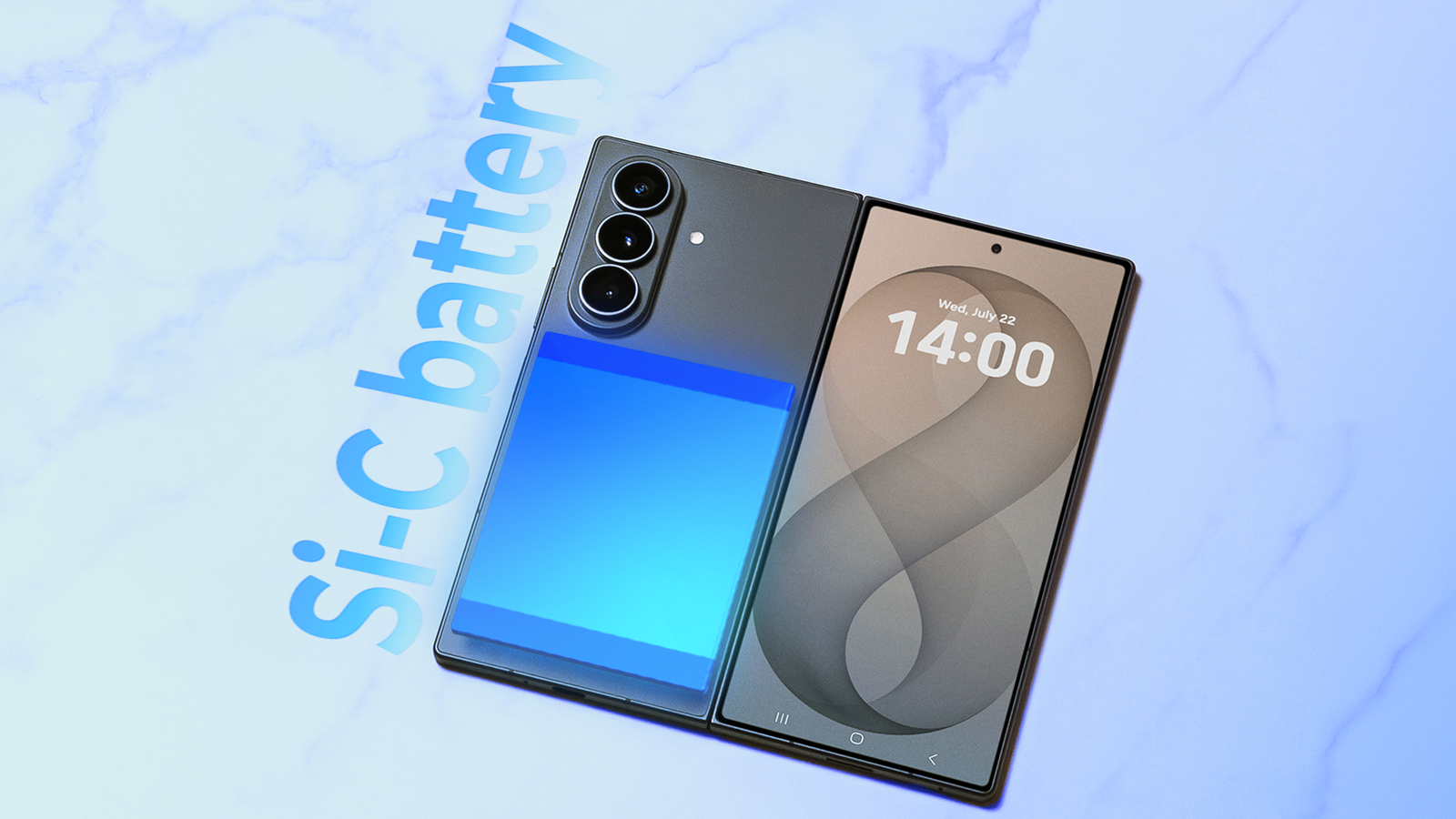
July 2026 was a big month for the smartphone industry. In China, Xiaomi Redmi Note 17 Pro arrived with a 9,000mAh cell and a marketing push built around a five-year battery guarantee.
In London, Samsung finally joined the silicon-carbon party, shipping the tech for the first time in the Samsung Galaxy Z Fold 8 and Galaxy Z Flip 8. I’m happy to see Samsung has finally made this move, and the engineering deserves credit.
Now, the company spent a good chunk of that briefing talking about longevity and safety. All that talk sets up a follow-up Samsung probably didn’t want. The battery is engineered to last, sure, but no battery lasts forever.
Samsung loves the credit that comes with long-term promises. It’s far less keen on the part of the phone that degrades on a schedule.
So here I am again, asking Samsung to please copy something a Chinese brand already does.
Foldables feel the squeeze first, so they get the benefit first
Slab phones are next

A traditional lithium-ion cell uses a graphite anode. The material is dependably stable, but limited in how much charge it holds per gram.
Silicon-carbon cells substitute some of that graphite with silicon, which can theoretically absorb about 10 times as many lithium ions.
Foldables need this more than slab phones. Hinges and dual displays already fight over every cubic millimeter inside.
Silicon-carbon is how Samsung got 5,000mAh into the Galaxy Z Fold 8 Ultra at just 4.1mm unfolded.
The standard Z Fold 8 packs 4,800mAh, and the Z Flip 8 keeps its 4,300mAh capacity in a body that now measures 13.1mm folded down from 13.7mm.
Even though foldables benefit more from this, there’s no reason this stays a foldable exclusive, and leaks suggest it won’t.
Samsung is reportedly testing the same silicon-carbon cells for the Galaxy S27 lineup. The raw numbers are impressive for Samsung, even if Chinese brands make them look modest.
Denser cells, shorter lives, and the engineering in between
Silicon swells 300%

Silicon is a better energy reservoir, but it’s also less mechanically stable. Pure silicon can swell by up to 300% when it absorbs lithium ions during a normal charge cycle.
Repeat that expansion and contraction enough times, and the cell starts to crack from the inside, which shows up as capacity loss and swelling.
To ship these batteries safely, Samsung rebuilt its power stack. But even with those safeguards, cycle life will not be as good as before.
European Product Registry for Energy Labelling (EPREL) filings rate the silicon-carbon cells in the Z Fold 8, Fold 8 Ultra, and Flip 8 at roughly 1,200 charge cycles before dropping to 80% health.
That’s a dramatic fall from the 2,000-cycle rating Samsung achieved with the graphite battery in the Z Fold 7.
Samsung’s 7 years of updates promise no longer add up
Year two is on you

That degradation curve makes Samsung’s software pitch harder to swallow. Starting with the Galaxy S24 and continuing through the Fold 8, Samsung has been promoting seven years of Android and security updates.
But the hardware coverage doesn’t come close. Under Samsung’s standard terms, battery coverage runs out after 12 months.
After year one, the cost of degradation is on you, and replacing a foldable split-cell battery won’t be cheap.
Samsung Care+ subscribers can get unlimited replacements when capacity drops below 80%, but that means paying a monthly insurance premium on top of a phone you already bought.
The warranty race Samsung hasn’t entered yet

Chinese brands are using battery longevity as a wedge, and Xiaomi is willing to absorb the long-term risk to prove the point.
The Note 17 Pro ships with what Xiaomi calls a “First Sale Free Five-Year Battery Upgrade Guarantee.”
If the 9,000mAh cell drops under 80% health within the first four years of ownership, Xiaomi replaces it for free.
Samsung now has an opening to make its seven-year software promise a complete ownership package for both slab and foldable phones.
A transparent, multi-year battery-health guarantee that lines up with its OS commitments.
-
- SoC
-
Qualcomm Snapdragon 8 Elite Gen 5 for Galaxy
- RAM
-
12GB / 16GB
- Storage
-
256GB / 512GB / 1TB
- Battery
-
4,800mAh
- Operating System
-
Android 17 / One UI 9
- Front camera
-
10MP main / 10MP cover
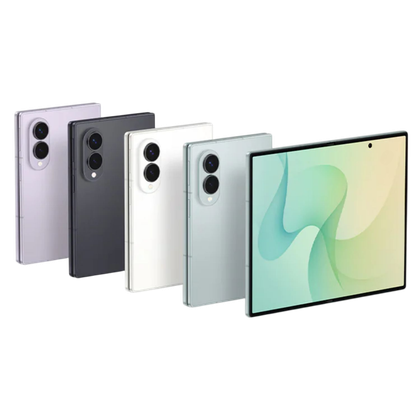
The Samsung Galaxy Z Fold 8 has a 4:3 aspect ratio open screen, making it great for video and reading books, and when closed the device is compact, with apps on the cover screen appearing normally. It joins Samsung’s Galaxy Z Fold 8 Ultra, which has a more traditional tall-and-thin design.
-
- SoC
-
Qualcomm Snapdragon 8 Elite Gen 5 for Galaxy
- RAM
-
12GB / 16GB
- Storage
-
256GB / 512GB / 1TB
- Battery
-
5,000mAh
- Operating System
-
Android 17 / One UI 9
- Front camera
-
10MP main / 10MP cover
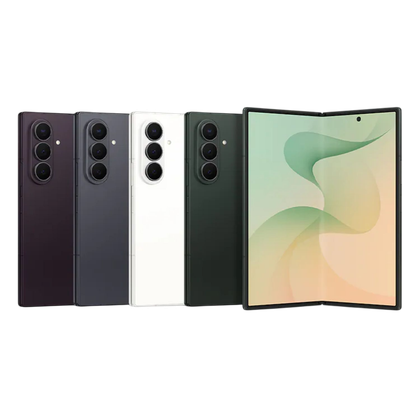
The Samsung Galaxy Z Fold 8 Ultra is a productivity-focused big-screen folding phone, with an emphasis on power and performance over the more media-focused Galaxy Z Fold 8. However, the specification is similar, with the camera and battery being the standout upgrades over the Z Fold 8.


PakarPBN
A Private Blog Network (PBN) is a collection of websites that are controlled by a single individual or organization and used primarily to build backlinks to a “money site” in order to influence its ranking in search engines such as Google. The core idea behind a PBN is based on the importance of backlinks in Google’s ranking algorithm. Since Google views backlinks as signals of authority and trust, some website owners attempt to artificially create these signals through a controlled network of sites.
In a typical PBN setup, the owner acquires expired or aged domains that already have existing authority, backlinks, and history. These domains are rebuilt with new content and hosted separately, often using different IP addresses, hosting providers, themes, and ownership details to make them appear unrelated. Within the content published on these sites, links are strategically placed that point to the main website the owner wants to rank higher. By doing this, the owner attempts to pass link equity (also known as “link juice”) from the PBN sites to the target website.
The purpose of a PBN is to give the impression that the target website is naturally earning links from multiple independent sources. If done effectively, this can temporarily improve keyword rankings, increase organic visibility, and drive more traffic from search results.