All photographs courtesy of the author.
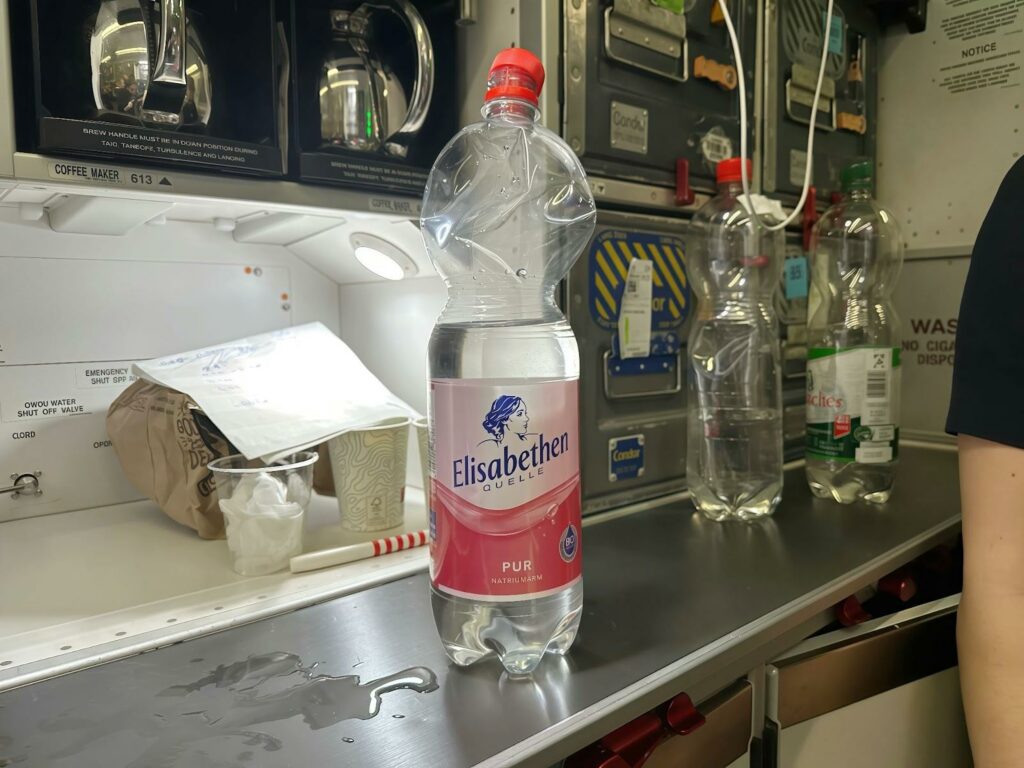
My water journey began on the airplane, when I recognized a bottle of Elisabethen Quelle. I remembered this brand from my time at the Doemens water sommelier school in Gräfelfing. It’s a mainstream still water of medium mineralization with a slightly salty taste. There’s something comforting about this water, maybe because of its high hydrogen carbonate content, which aids digestion. I usually get a tummy ache when I fly, so I can vouch for its curative effects.
Elisabethen Quelle
Rating: ★★★★☆
mg/L
Sodium: 15.3
Magnesium: 28.3
Calcium: 96.9
Chloride: 12
Sulfates: 3
Hydrogen carbonate: 431
When I asked the flight attendant if I could take a photograph of the bottle, she asked why. I told her that I’m a water sommelier, and she said, “What’s that?” and I said, “Like a wine sommelier, but for water.” “I don’t know what a wine sommelier is.” Not knowing how to answer, I walked back to my seat and continued watching Dirty Harry.
Most people, especially New Yorkers, who are proud of their tap water, mock my interest in mineral water; to them, “all water tastes the same.” I disagree. When I was little, my mom would send me to buy different brands of water; she had a special interest in some and a strong disdain for a few.
I was accredited as a water sommelier in 2023. Only two schools in the world offer these degrees: there is the Fine Water Academy, an online course taught by celebrity sommeliers, and then a course at the Doemens Academy near Munich, organized by Peter Schropp from the Water Sommelier Union. The decision, for me, was easy. The first sounded like a scam, whereas at Doemens I would study under a chemist and pass exams based on my capacity to distinguish different waters blindfolded.
I got my degree at Doemens in 2023. But this would be my first year attending one of the annual meetings of the Water Sommelier Union, which always take place in iconic water-related locations. This year, we were going to Karlovy Vary (Carlsbad), in the Czech Republic, a spa town that dates back to around 1350. I knew the place because of its glamorous film festival, which has a fetish for Hollywood types. (My film El Planeta had its Czech premiere there in 2021, the year the festival honored the career of Johnny Depp.)
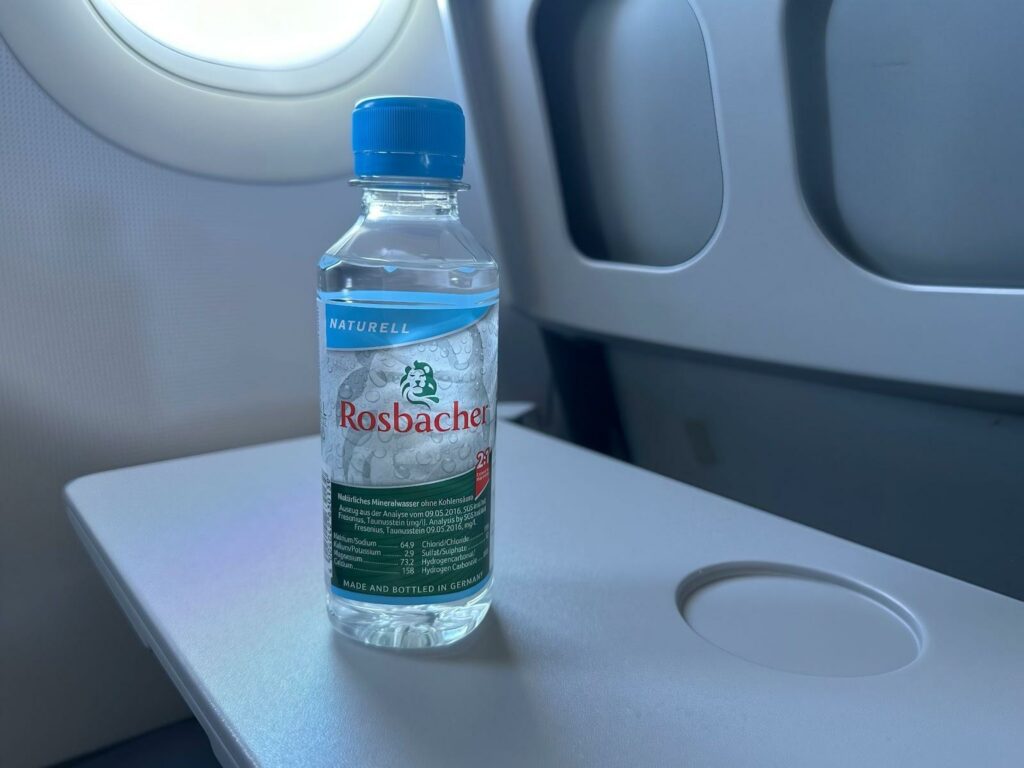
On the flight from Frankfurt to Prague, I was given Rosbacher, a pleasant and harmonious water, also of decent mineral composition. Its defining note is calcium, which gives it a particular sensation in the back of the mouth that some describe as chalky. With the exception of some medicinal mineral waters, most waters don’t really have a taste but a haptic sensation instead: when describing the taste and aftertaste of mineral water, we are often describing physical feelings inside the mouth and throat.
Rosbacher Naturell
Rating: ★★★☆☆
mg/L
Sodium: 64.9
Magnesium: 73.2
Calcium: 158
Chloride: 109
Sulfates: 12
Hydrogen carbonate: 815
After landing in Prague, I had goulash for breakfast at the famous Café Louvre. The café was cute, like a wedding cake or a Wes Anderson set, but I was surprised by the early-2000s black-and-white boudoir photography decorating the walls. Eurotrash is alive and kicking in Eastern Europe. What a joy it was to hear Eurodance blasting in every store and to see people wearing low-rise jeans unironically. When it started drizzling, I bought myself a fancy umbrella for the collection I keep at home. Its unhinged design combined a beige camouflage pattern with a classic solid-wood cane handle. Something about it seemed Austrian, and I was right. The shopkeeper, surprised that I knew the brand, enthusiastically tried to sell me some gloves. I disappointed her by staying within my budget.
Soon after, I ordered an Uber to go sixty-six miles west toward Karlovy Vary. I bought a bottle of Rajec at the local McCafé in case I got thirsty on the way.
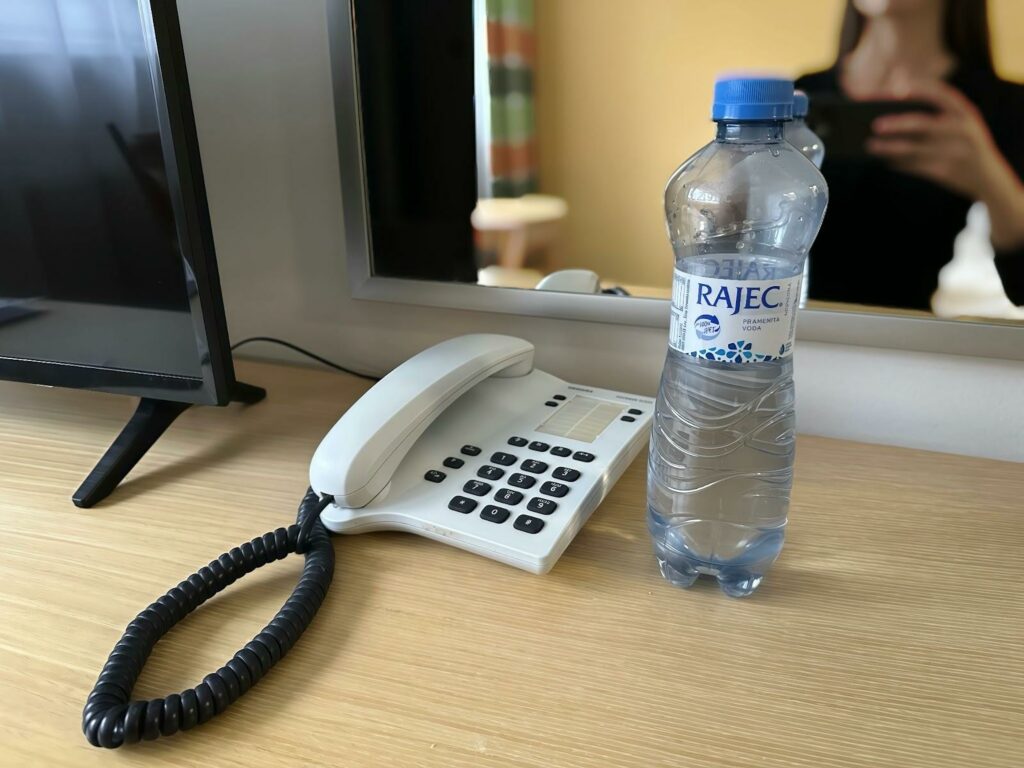
Rajec is a still spring water from Slovakia with a low total natural mineralization of 322 mg/L and a balanced ratio of calcium to magnesium. It is low-mineralized by European standards, that is; in the United States, the taste of this water would bother some people. Most U.S. water brands have very low minerality—some are just plain purified water. One reason for this is the United States’ obsession with cleanliness and hygiene. Low-mineralized waters detoxify the body by flushing out its minerals. That’s a good thing, but only when combined with the intake of minerals like sodium to replenish the body. If you’ve ever been at an airport and felt even more thirsty after drinking a few bottles of Dasani, this is the reason. Also, sodium, the most common mineral in mineral water, suffered from a large organized campaign that pushed many U.S. brands to sell waters “recommended for low-sodium diets” to prevent high cholesterol. For a long time, these waters have been advertised as a healthy choice—even though only 30 percent of the population needs to adhere to such a diet.
I didn’t care much for the Rajec; the calcium overpowered the sodium and the magnesium, making it a bit too bitter for me.
Rajec
Rating: ★☆☆☆☆
mg/L
Sodium: 2.9
Magnesium: 19.5
Calcium: 86.6
Chloride: 4.6
Sulfates: 16.6
Hydrogen carbonate: 331
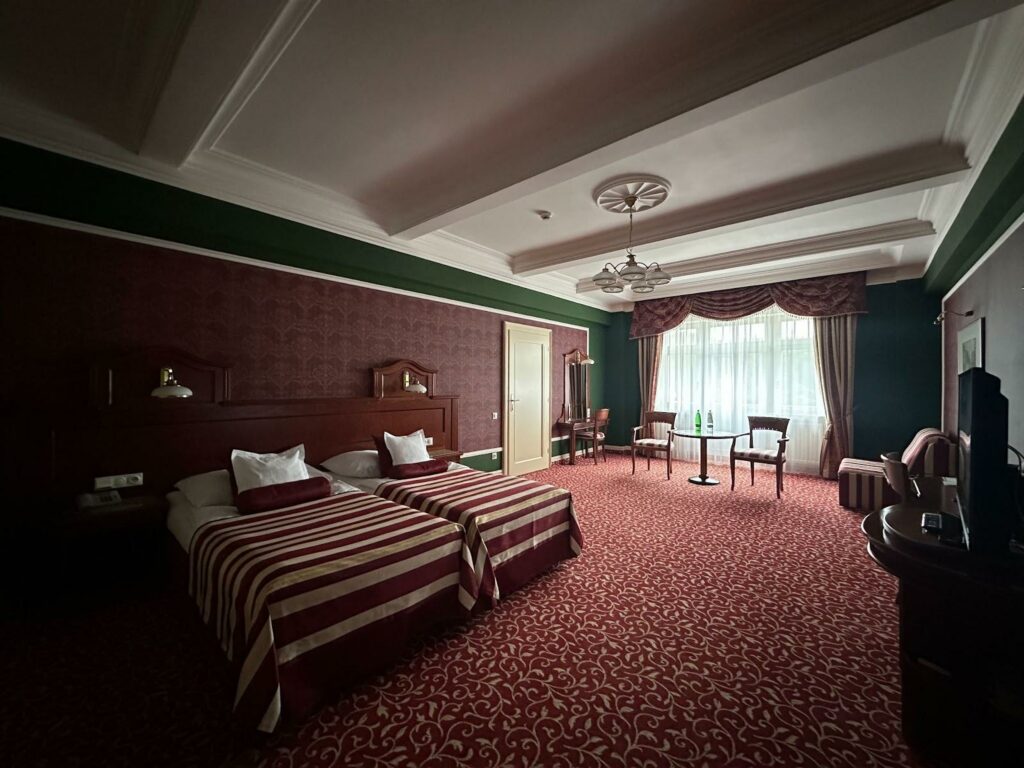
After a long car ride, I finally arrived at my destination: the Spa Hotel Imperial in Karlovy Vary. The lobby, though grandiose, had seen better days. The city’s greatest year for tourism was 1911, and the chandeliers reflect this. In the nineteenth century, Carlsbad, Marienbad, and Franzensbad—the bohemian spa triangle—were popular destinations for the European aristocracy and intelligentsia. Goethe stayed in Carlsbad for at least a month every year, treating his gout and meeting different society ladies. Nowadays, these towns host mostly middle-class Russian and Chinese tourists, because they look like caricatures of Europe straight from Wes Anderson’s The Grand Budapest Hotel.
Once I reached my bed, I succumbed to my jet lag until the 8 P.M. “informal get-together in the Café Vienna Musical Lounge.” Not seeing any of my old classmates, and feeling like a fish out of water, I joined a group from Taiwan at a table in the lounge, a room decorated like the Moscow subway system, or Trump’s ideal of a ballroom. Because of the popularity of water sommelier culture in Asia, Taiwan is the only place outside Germany where Doemens has an academy.
After a glass of water and a beer with the Taiwanese teacher and his disciples, who were celebrating his latest book—the first book on water sommelier studies published in Mandarin—I had dinner at Paris, the hotel’s restaurant, with a beautiful yoga instructor from Germany who took the Doemens course in the early 2010s as one of the first students in the program. She splits her time between Hamburg and Ibiza, where she has a studio. This year, she was selected to be the German ambassador of mineral water. She was one of the very few people at the gathering who was not a restaurateur or sent from the headquarters of a major water brand. Her better sense of style reflected this unequivocally.
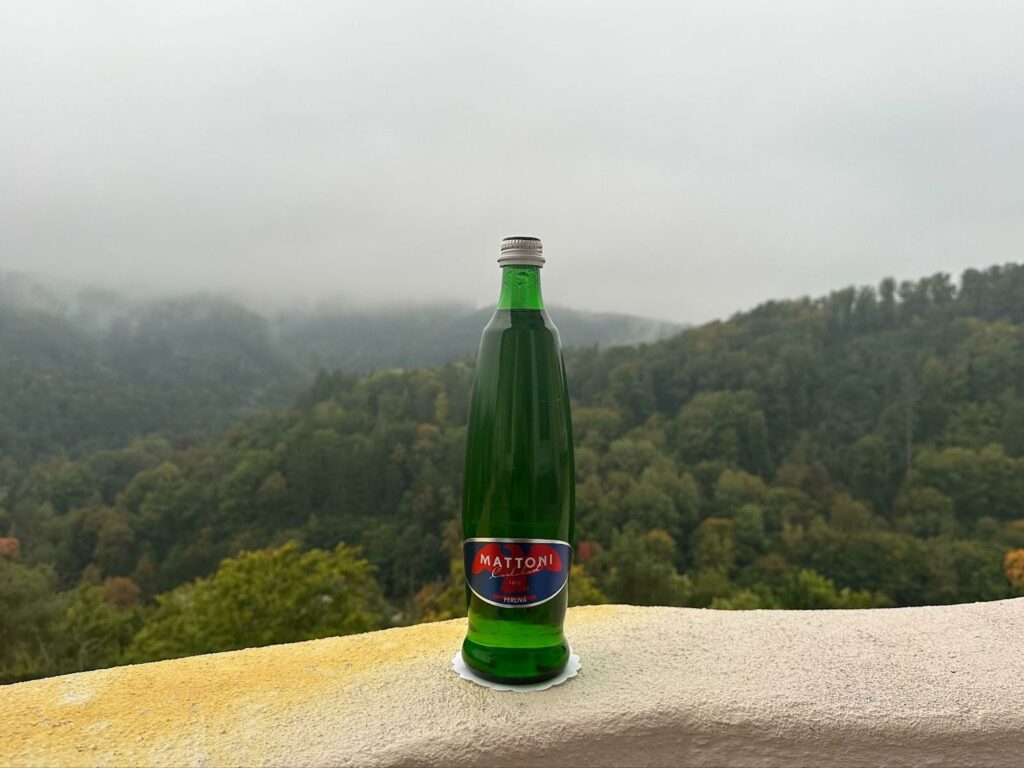
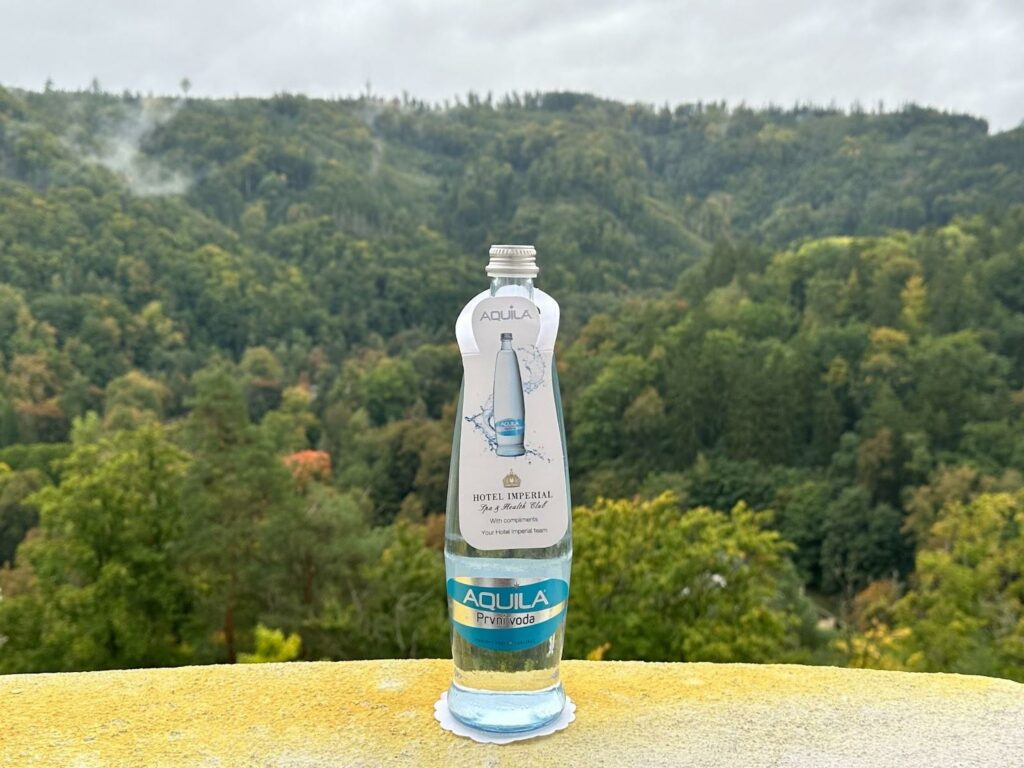
The waters served at the hotel were Mattoni (carbonated) and Aquila (still).
The next day, my jet lag woke me at 6 A.M., which came in handy because at 8 A.M. we would be taking a bus to the Soos National Nature Reserve. At the bus stop, I finally saw two of my old classmates: Valen from Hong Kong and Urte from Lithuania. Valen said she had also visited Prague. “I was told Prague was like a fairy tale, but I was shocked by how gloomy the Czech are.” We explained to her that this is a common effect of having been part of the Soviet Union, then took a selfie together. We were about eighty people in total. Some were taking videos and conducting interviews with one another with professional-looking equipment. I was a bit confused by this until I learned that, aside from the many representatives from water companies who come here to network and learn about new regulations, there are a few people who are trying to make it as water sommelier influencers. Documenting the annual meetup gives them a chance to show the world that being a water sommelier is, or could be, a legitimate career.
On the bus, I talked with the woman in charge of the packaging for the Canadian water brand Flow about the fear of a third world war prevalent among European youth. Behind us were people from Danone Group: a Spaniard who worked for Font Vella and Lanjarón, and a Frenchman in charge of Evian and Volvic in Paris.
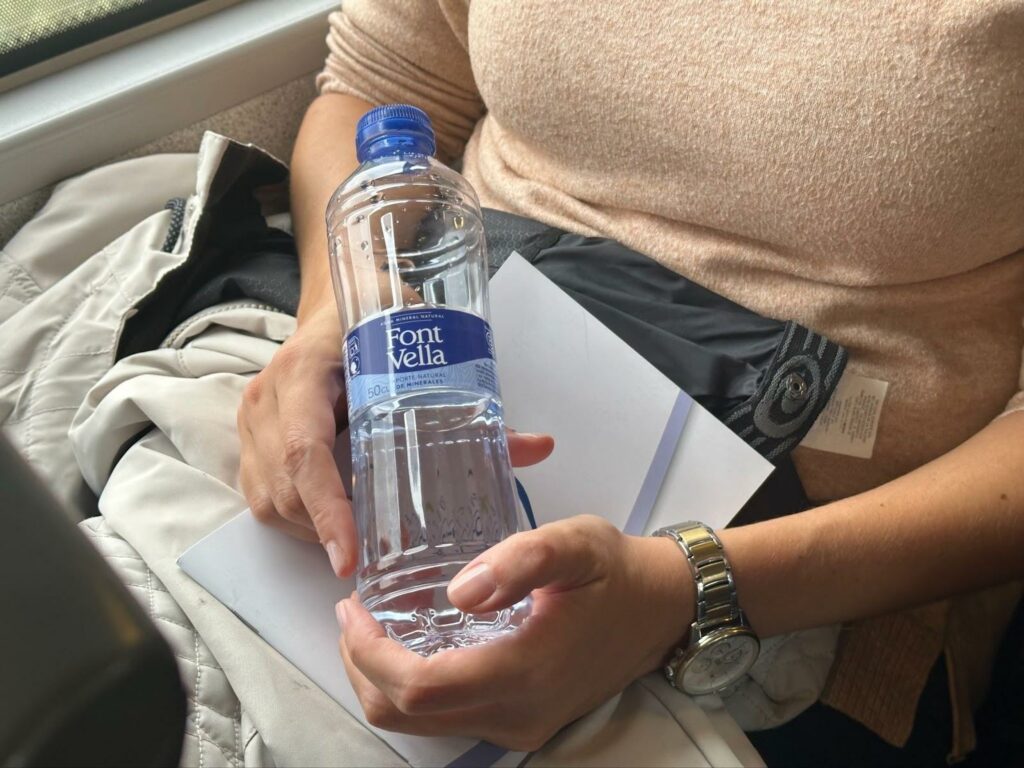
The woman from Font Vella was drinking Font Vella. Everyone was drinking the waters from the companies where they worked.
The Soos National Nature Reserve features extensive peat bogs, fens, and numerous mineral springs. A nature trail runs along the bottom of a dry lake that was once full of salt (mineral) water. Another particularity at Soos is the so-called Kieselguhr Shield. This deposit, furrowed by erosion, shows the remnants of shells of diatom algae on the bottom of the lake. Covered with yellow and white layers of precipitated mineral salts, it resembles a moonscape. Although it sounds magical in writing, it was a pretty ugly and desolate place—and cold. Arriving at the main attraction, the Imperial Spring, we were greeted by a fountain that smelled of rotten eggs (hydrogen sulfide) and tasted of period blood (iron).
The water at the reserve is naturally effervescent, and its high carbon dioxide content works as a preservative: in an enclosed bottle, it keeps for up to fourteen days. Waters like this, with a lot of iron, oxidize. When bottled under the right conditions, mineral water can have a very long shelf life. On the other hand, if you go to a spring to gather water in your own container, oxygen, which speeds up oxidation, might get trapped in the bottle. To stay safe, if a spring tastes or smells “crazy,” drink the water on the spot.
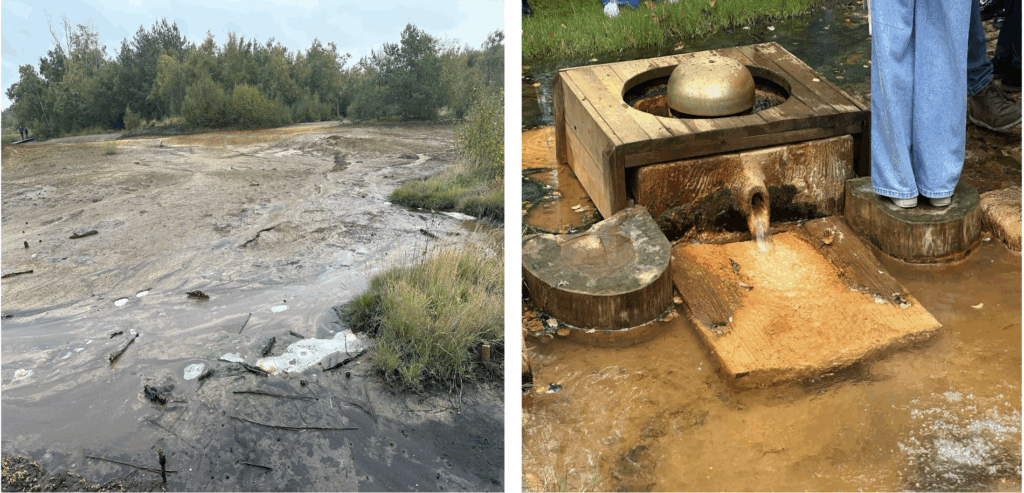
Water from Imperial Spring at Soos Reserve
Rating: ★☆☆☆☆
mg/L
Sodium: 1,570
Magnesium: 23.2
Calcium: 66.9
Chloride: 591
Sulfates: 1,850
Hydrogen carbonate: 1.314
Potassium: 39.4
Manganese: 1.62
Ammonium ions: 0.46
Iron: 34.9
Fluoride: 2.5
Nitrogen dioxide: <0.005
Nitrates: <0.5
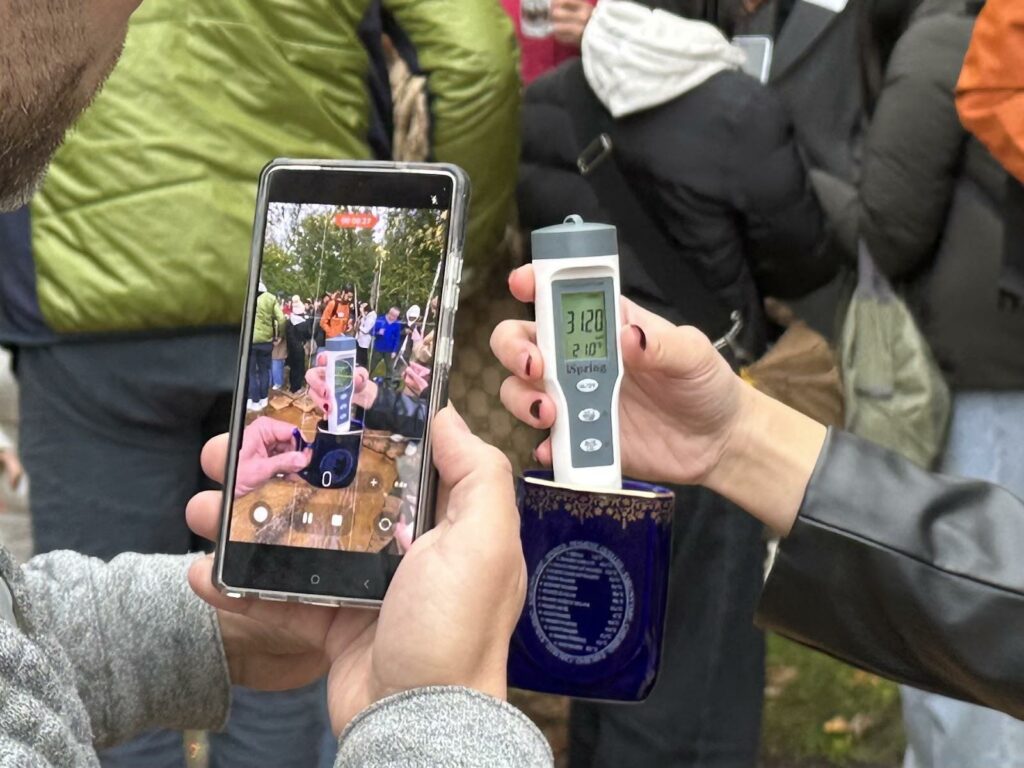
Volevah, the creator of the PickAqua app, checks the total dissolved waters in the Imperial Spring. The PickAqua app is a database of every single water brand in the world. You can pick two waters and compare their health benefits. There’s also a piece of music assigned to each water, inspired by its unique atomic vibrations.
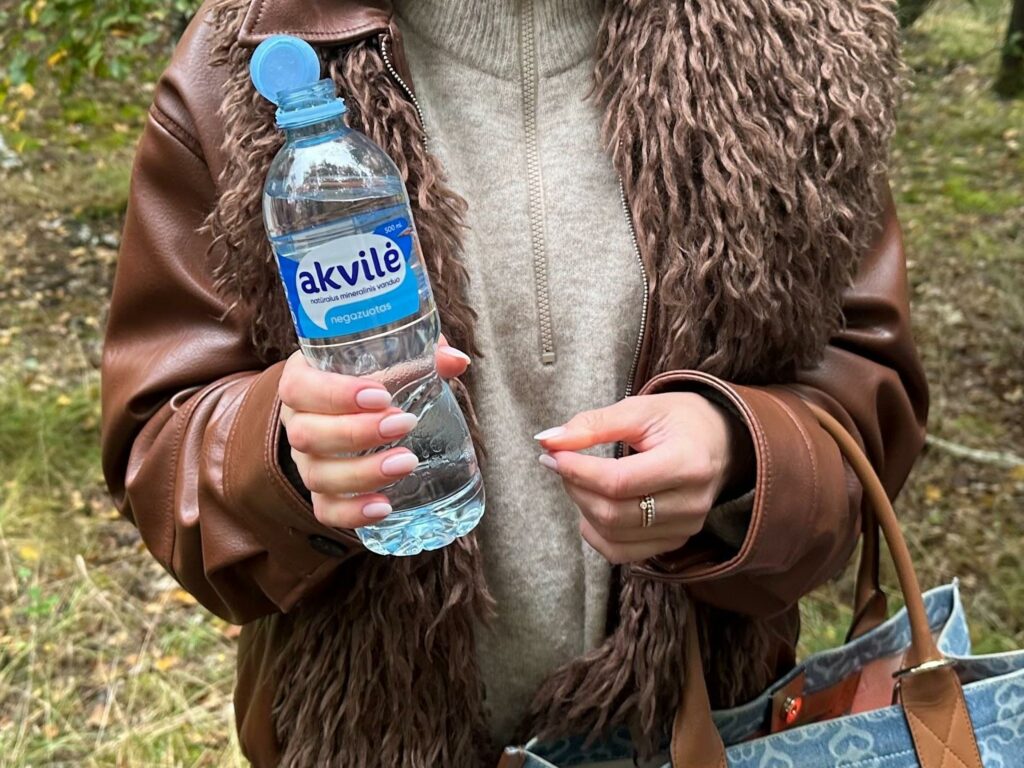
Urte cleanses her palate with water from Akvilė, the company she is an ambassador for.
The other attraction at Soos were the mofettes: little puddles of effervescent brown water. They are basically earth farts: When the earth’s surface is saturated with water after a heavy rainfall, the rising gases penetrate the surface water, giving the impression that it is boiling. When the mofettes are dry, the gases rise directly into the atmosphere and the vents hiss.
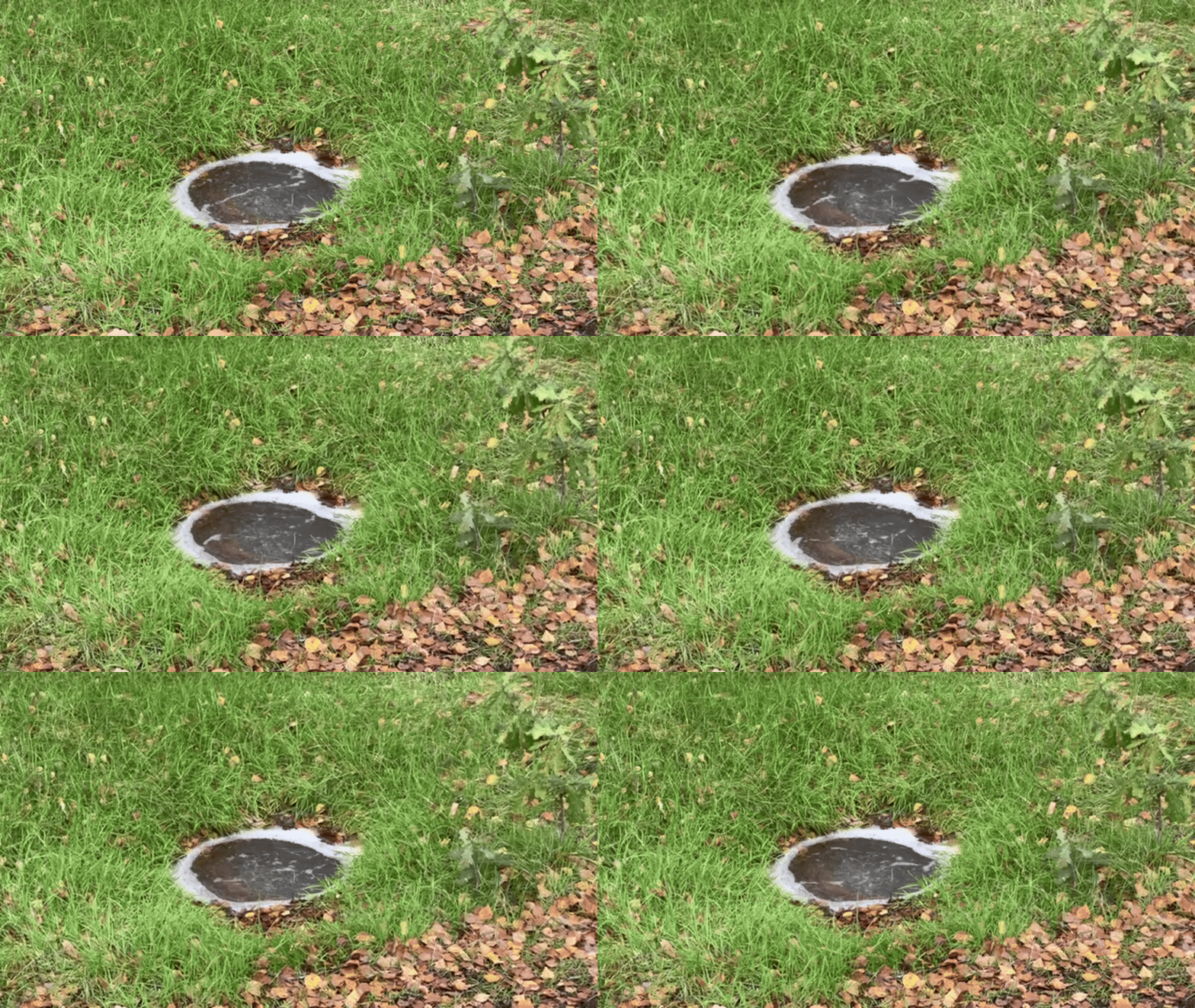
The carbon dioxide escaping from the mofettes can be a deadly trap for small animals. A water sommelier dropped their iPhone into one of them.
After the field trip, we went to a restaurant, where I had more goulash and listened to water gossip. According to the European Water Association, it is illegal in Europe to modify or sanitize mineral waters in any way; instead, they must be bottled straight from the source, without any human intervention. When this is done correctly, and without overexploiting a spring, the water comes out naturally clean. You can remove iron, manganese, and sulfur, but the only thing you’re allowed to add is carbonation. If a brand cleans its water, it loses the “mineral water” label (such as Vichy, Catalan, Evian) and becomes “filtered water” (Dasani and smartwater), which isn’t good for business, because the latter is much cheaper. Nestlé’s Perrier brand got naughty and filtered the water from its overused Vergèze source to address repeated incidents of chemical or fecal bacteria pollution and E. coli. As in Ibsen’s play An Enemy of the People, in which contaminated spa waters push characters to political corruption, Nestlé has been trying to persuade the French government to bend the law to Nestlé’s own interests. The nerve!
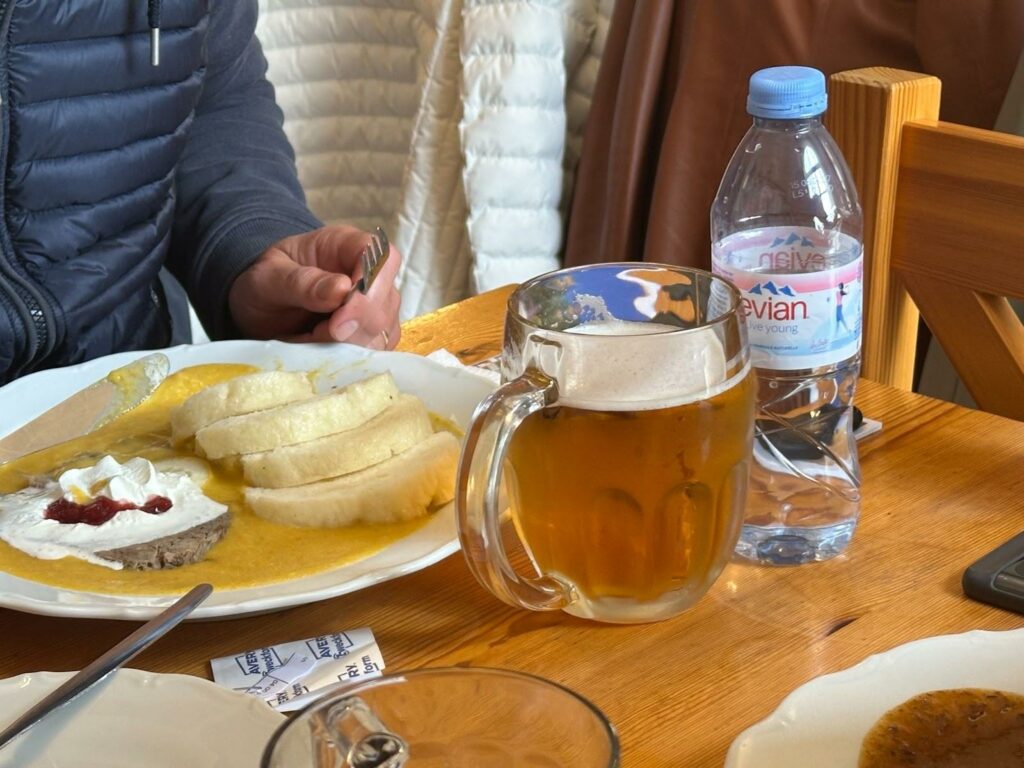
Dessert was an opportunity for more gossip, this time about the Water Sommelier Union itself. As I mentioned earlier, both the union and the Doemens Academy are scientifically rigorous but a tad boring—Dr. Schropp (our teacher, whom we all love) is a real chemist with thirty years of experience. Meanwhile, our archenemies at the Fine Water Society are flashier, Americanized, and get away with questionable practices because they are more fun and accessible. So, yes, Michael Mascha and Martin Riese from the Fine Water Society don’t rinse their glasses while evaluating different brands. But they are better at marketing: Martin Riese was responsible for the extensive water menu at the Los Angeles County Museum of Art years ago. I find this drama endearing. (My dream is to make a Zoolander-style film about the beef between the two water sommelier associations and their leaders.)
Because of this feud, the man sitting next to me, an Indian water enthusiast, recommended that I skip the following morning’s meeting—a PowerPoint presentation about the annual budget, the number of new union members, and other bookkeeping matters—and go to the sauna instead. “Believe me, I’ve been doing this for years. You’ll be bored to death,” he said.
On the bus to the Karlovy Vary underground springs, most of the passengers slept while I chatted with a rep from the British water distributor Aqua Amore, and the Indian water enthusiast asked questions about my career as a filmmaker. I was exhausted. I just wanted to escape to my hotel room and drink water alone, in silence.
But, alas, I went with the flow and joined the guided tour of the fountains that are an icon of the Karlovy Vary Film Festival. The tour also highlighted an underground spring so highly mineralized that the pipes get riddled with sediment extremely quickly.
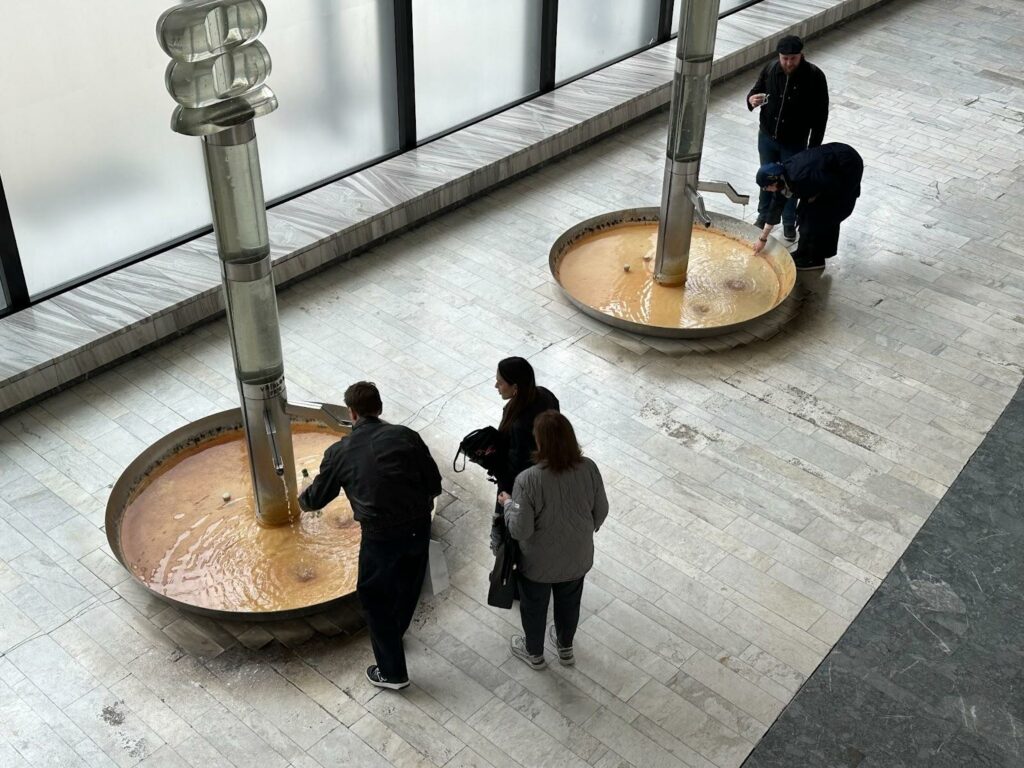
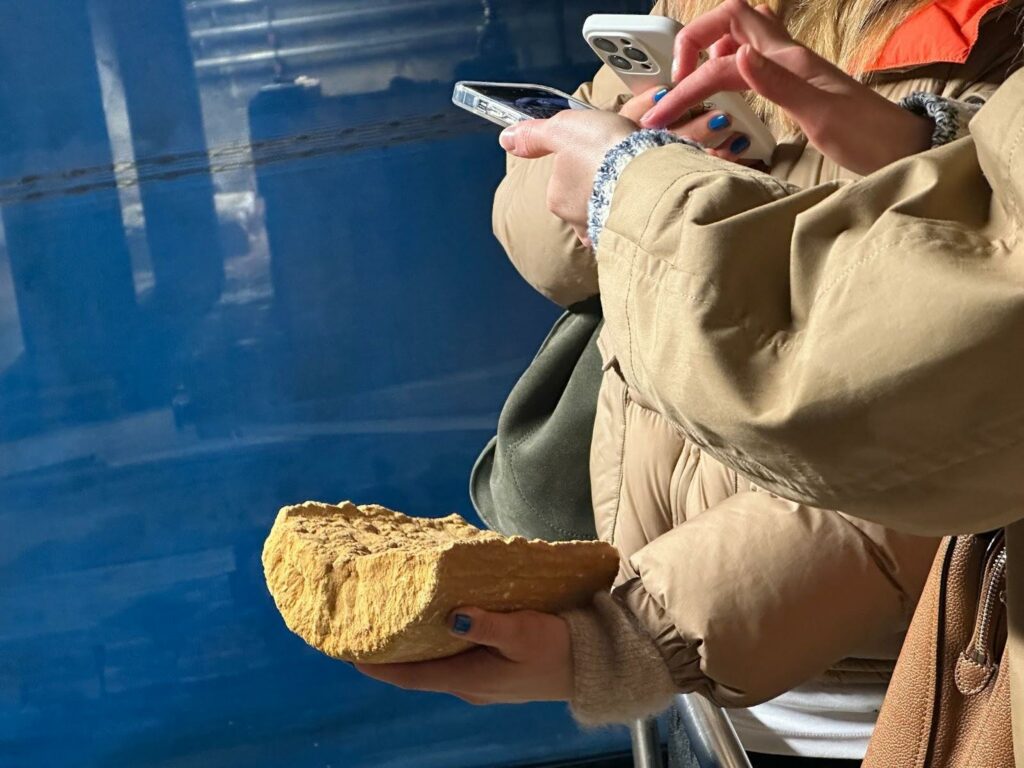
This amount of sediment took only three weeks to form at the Karlovy Vary underground springs. That’s the main attraction.
To take advantage of this fact, the Karlovy Vary underground spa has a “fossilizing room,” where, over a period of seven to ten days, select objects are placed under a steady stream of mineral water and turn into stone. The spa then sells these objects as souvenirs. We had stopped to admire the solidified hats and shoes when the Indian water enthusiast turned to me and said, “Does your mind make you suffer? I know a few artists, and their brains torture them.” I said I was totally normal, and did my best to leave the group as soon as it was polite to do so.
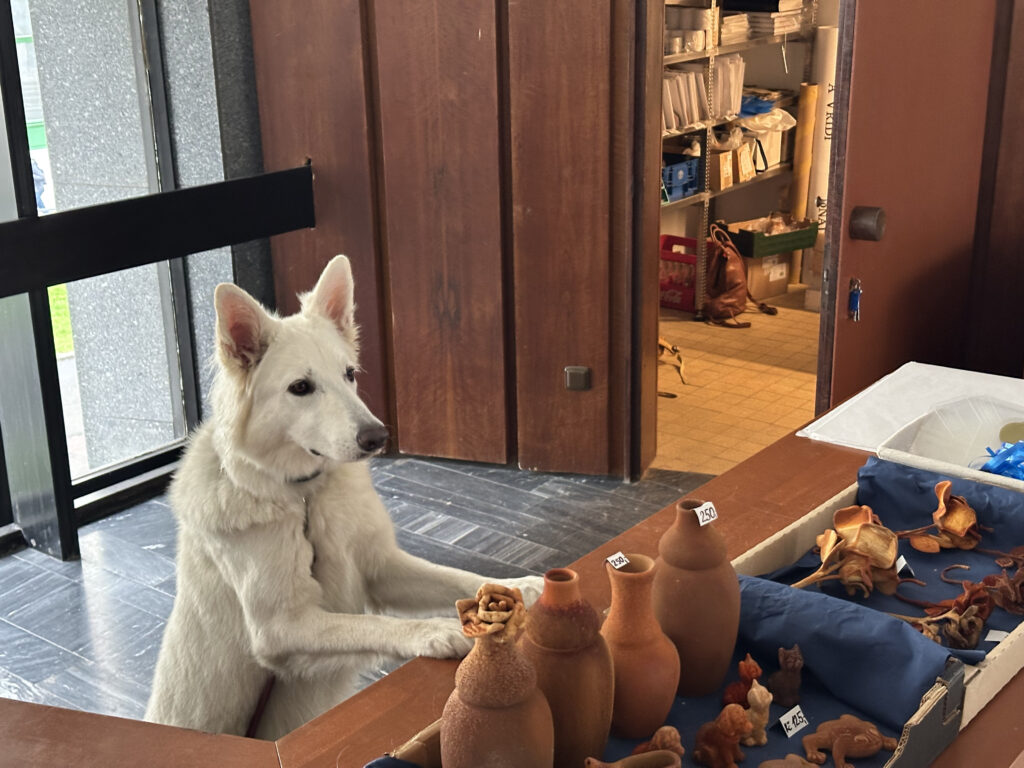
A dog selling fossilized objects.
The next morning, I did as I was told and skipped the annual meeting to go swimming. After the sauna, I felt relaxed and ready to meet my colleagues for lunch. They, on the other hand, looked hungry and defeated: the annual meeting had been spoiled by screams and recriminations regarding the inability of the union to be more “American” and marketing-friendly. “Why doesn’t the union have an Instagram? Why don’t we have a podcast?” The screaming man in question had apparently stormed out of the conference, never to be seen again. Who was this passionate water sommelier who felt the need to assert himself in a room of very polite and quiet people? I imagined him as a character from an I Think You Should Leave comedy sketch.
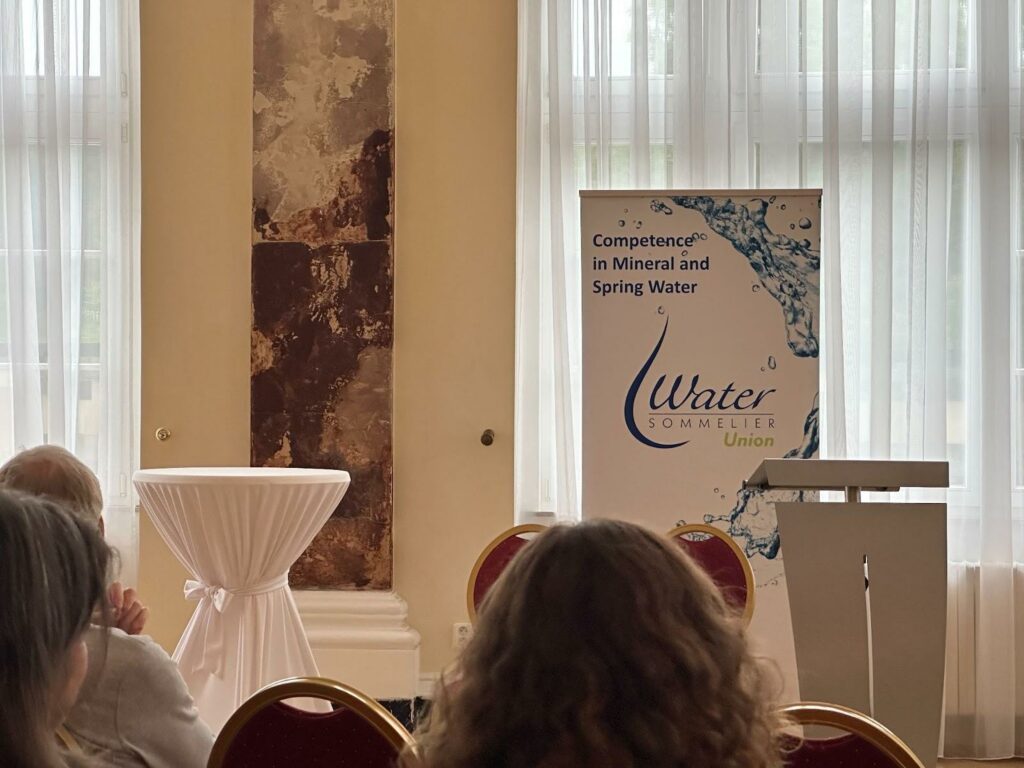
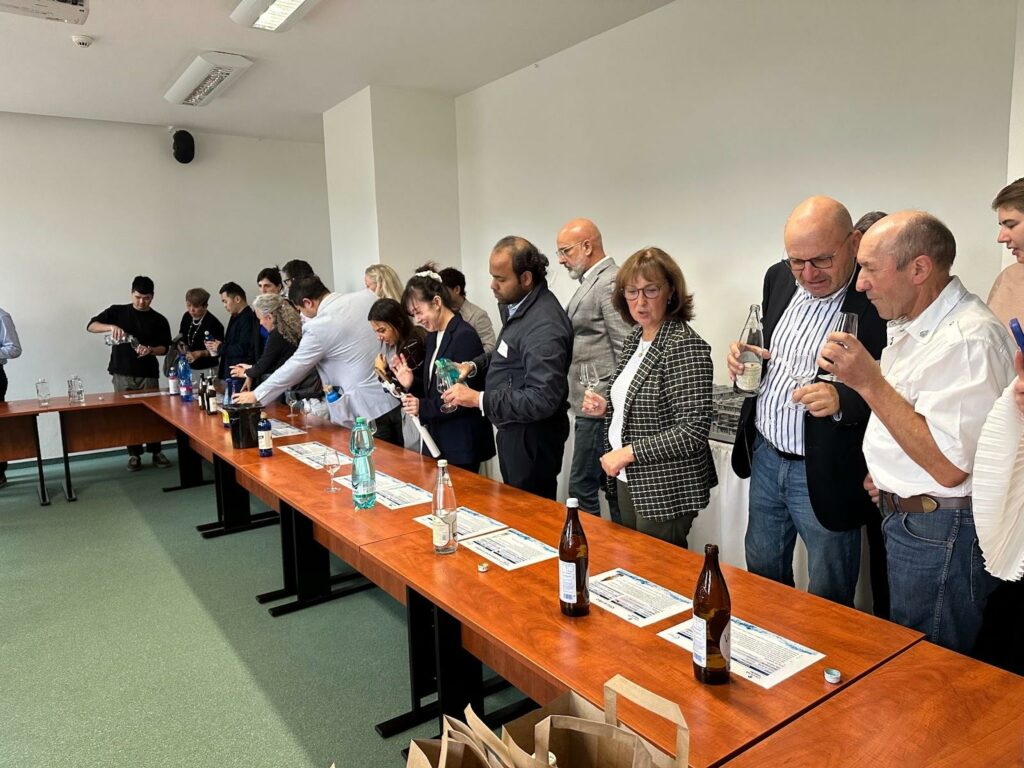
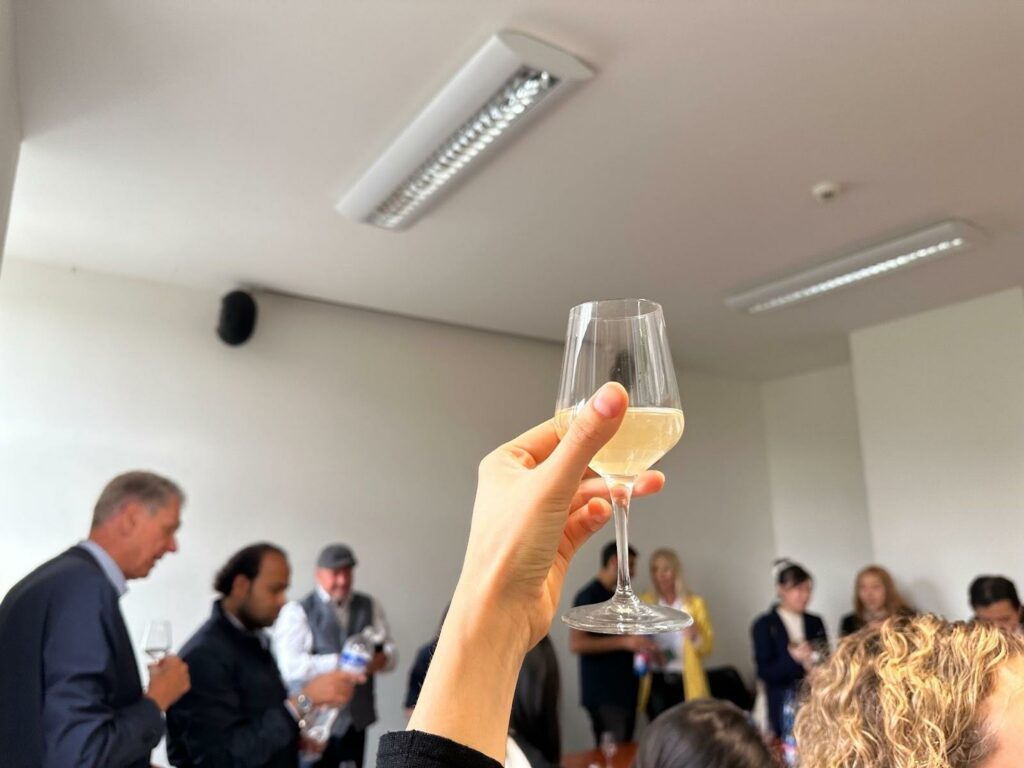
But the mood shifted to one of giddiness as we neared the moment we had all been waiting for: the water tasting. In a conference room, about twenty different mineral waters from the Czech Republic were displayed alongside laminated informative plaques.
***
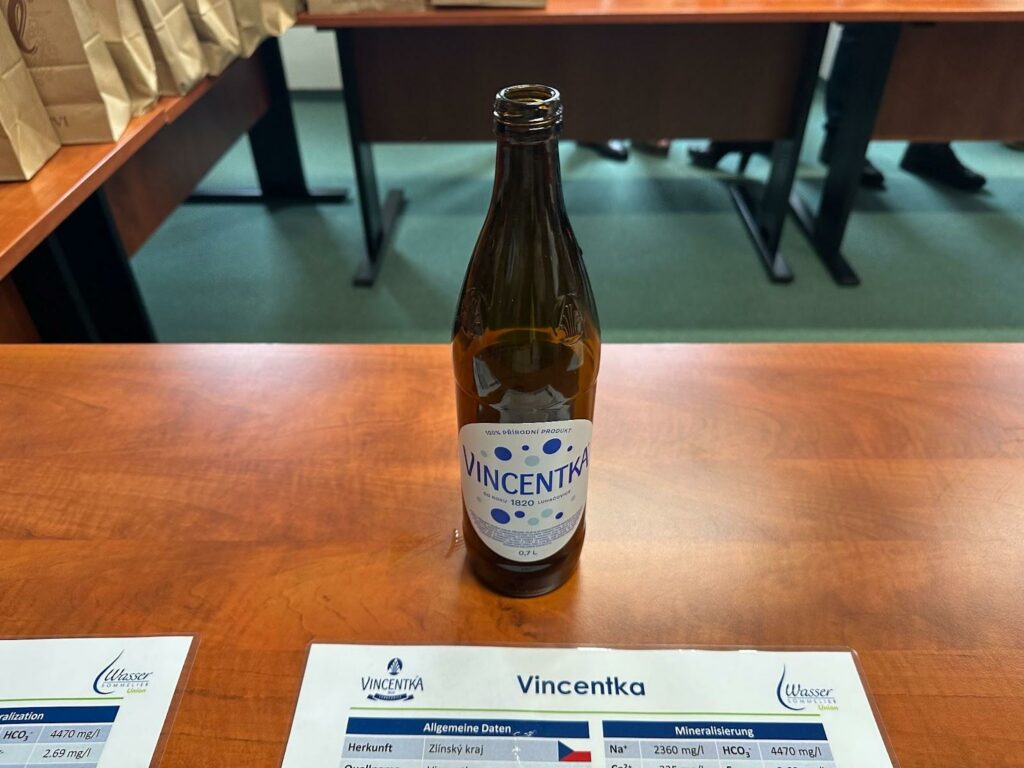
The first water was my beloved Vincentka. Truly my favorite water in the world. I discovered it in sommelier school, and since then it has been a big part of my life. I love how salty it is, how it tastes a bit of iodine, and its high lithium content. I do believe I feel happier after drinking it.
Vincentka
Rating: ★★★★★
mg/L
Sodium: 2,350
Calcium: 235
Chloride: 1,610
Hydrogen carbonate: 4,470
Fluoride: 2.69
Lithium: 8.62
Iodine: 6.38
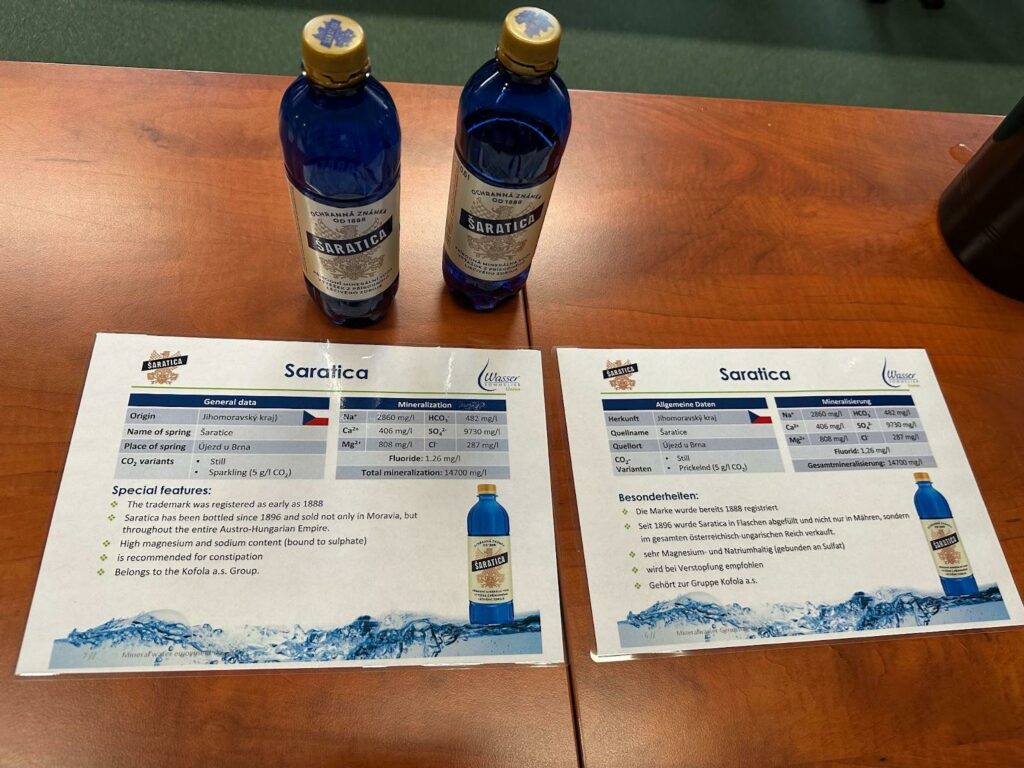
I really didn’t like Šaratica. It was too intense in all the wrong ways. There was something bitter about it, probably because of the unhinged amount of sulfates. It is recommended as a cure for constipation.
Šaratica
Rating: ★★☆☆☆
mg/L
Sodium: 2,860
Magnesium: 808
Calcium: 406
Sulfates: 9,730
Hydrogen carbonate: 482
Lithium: 3.81
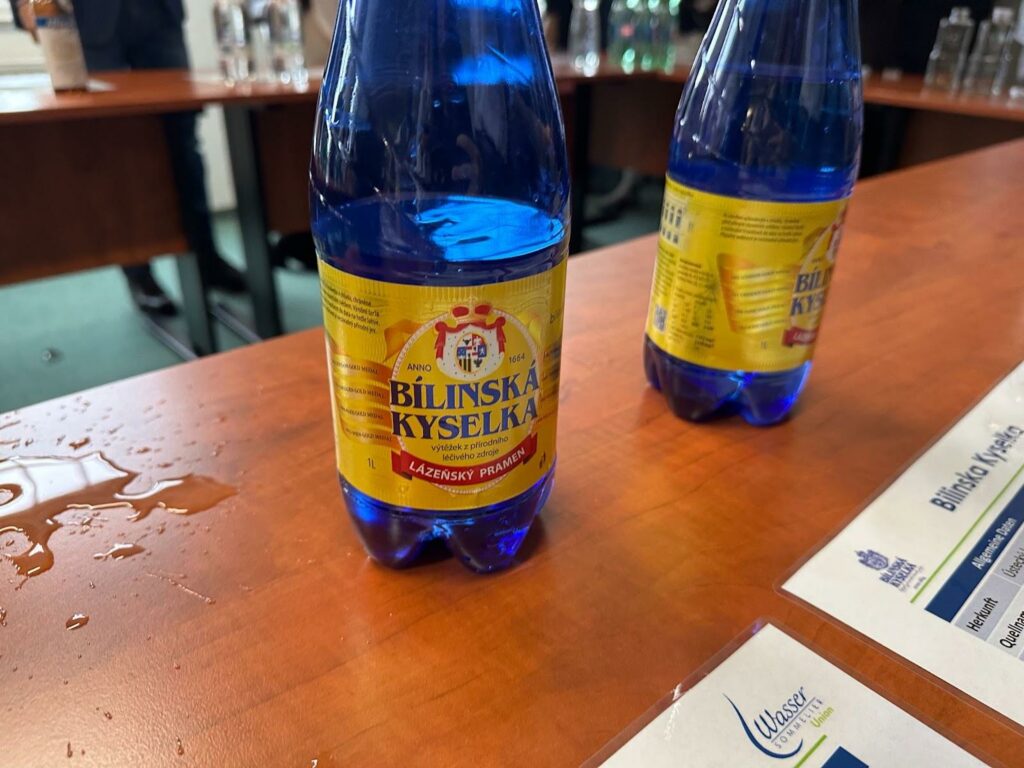
I liked Bílinská Kyselka: It was salty and had a decent amount of lithium. It can be drunk as a cure for digestive complaints: stomach acidity, heartburn, gallstones. When inhaled, it can reduce the swelling of the mucous membranes in the respiratory tract.
Bílinská Kyselka
Rating: ★★★★☆
mg/L
Sodium: 1,780
Magnesium: 48.8
Calcium: 140
Chloride: 226
Sulfates: 612
Hydrogen carbonate: 4,450
Fluoride: 5.60
Lithium: 3.81
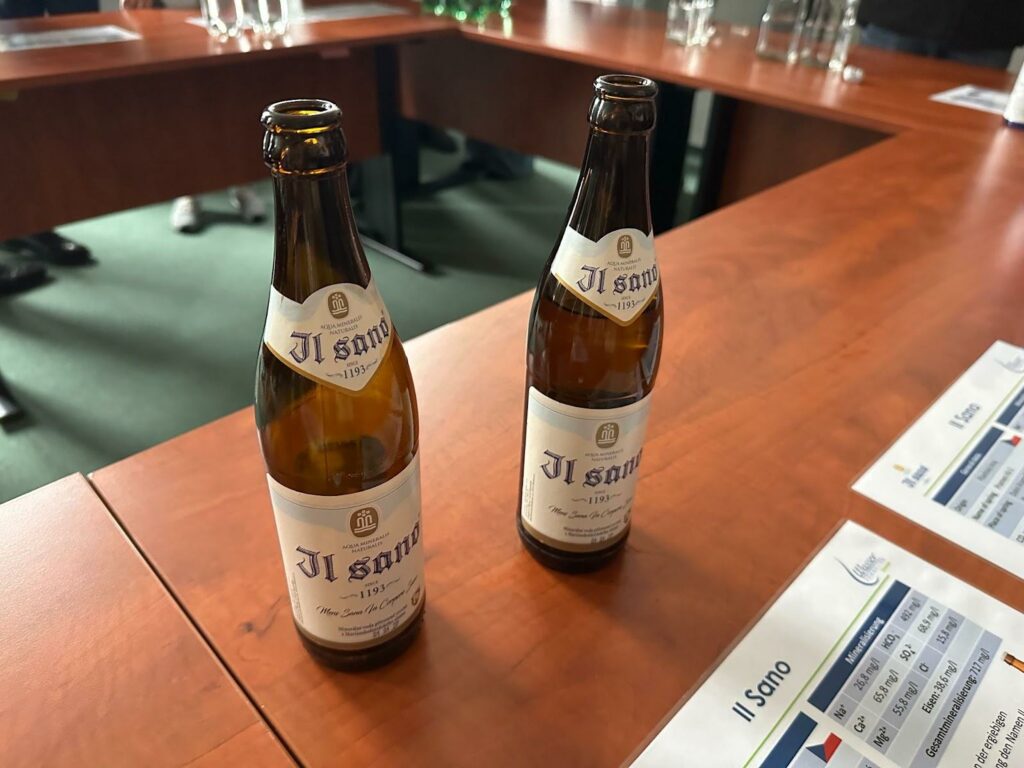
I remembered Il Sano clearly from my time at the academy. It is a naturally carbonated, iron-rich mineral water from a spring in the Kosí brook valley, first bottled by monks at the Teplá Premonstratensian monastery in 1193. It has a great bottle design, but it does taste as intense as it looks. It has so much iron that drinking it is like licking a rusty handrail.
Il Sano
Rating: ★☆☆☆☆
mg/L
Sodium: 26.8
Magnesium: 55.8
Calcium: 65.8
Chloride: 15.8
Sulfates: 68.9
Hydrogen carbonate: 492
Iron: 38.6
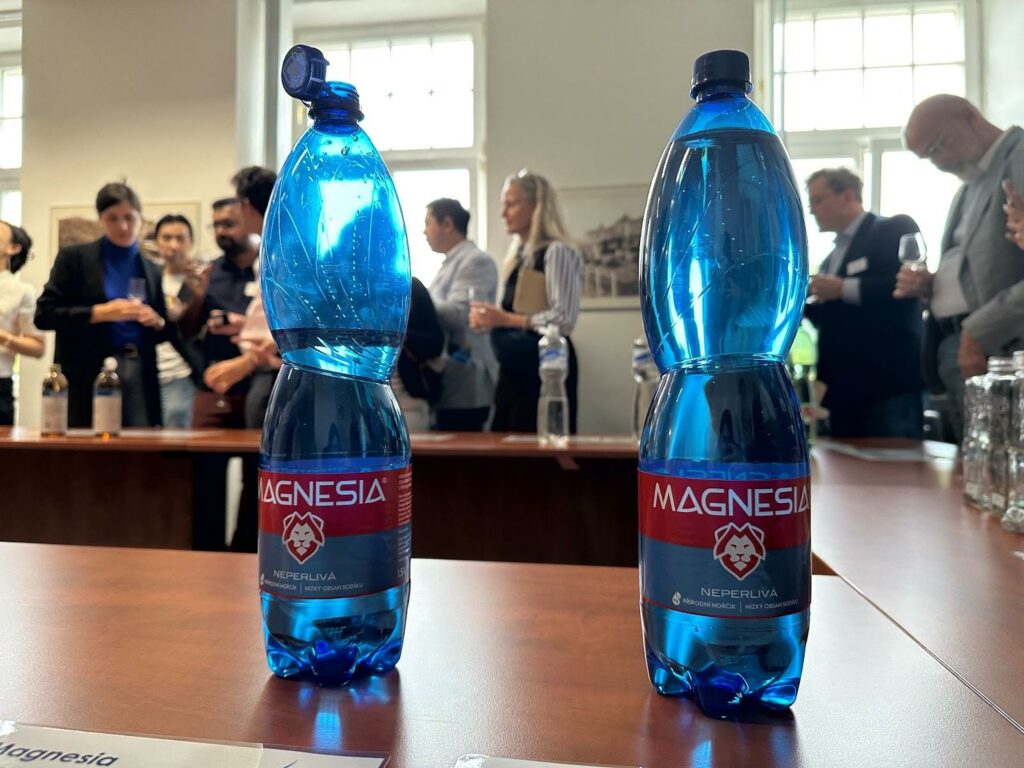
I’m not a huge fan of the sweetish taste of magnesium because I’m more attracted to salty waters, but Magnesia definitely does its job as a cure for constipation and muscle pains. It is similar to the popular brand Rogaska MD, which is not difficult to find in the United States.
Magnesia
Rating: ★★★☆☆
mg/L
Sodium: 5.20
Magnesium: 172
Calcium: 35.7
Chloride: 2.11
Sulfates: 10.2
Hydrogen carbonate: 950
Magnesia Extra
mg/L
Sodium: 7
Magnesium: 320
Calcium: 49.1
Chloride: 2.7
Sulfates: 19
Hydrogen carbonate: 1,710
Silicic acid: 83.7
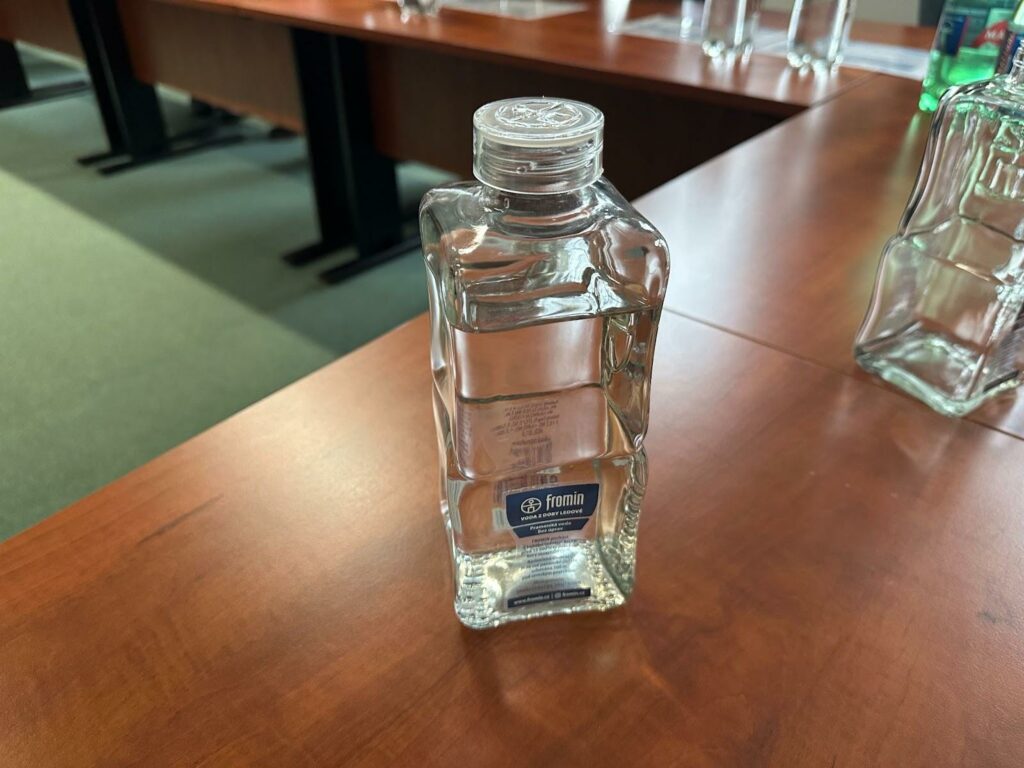
We used Fromin, a more harmonious, low-mineralized water, to cleanse our palates.
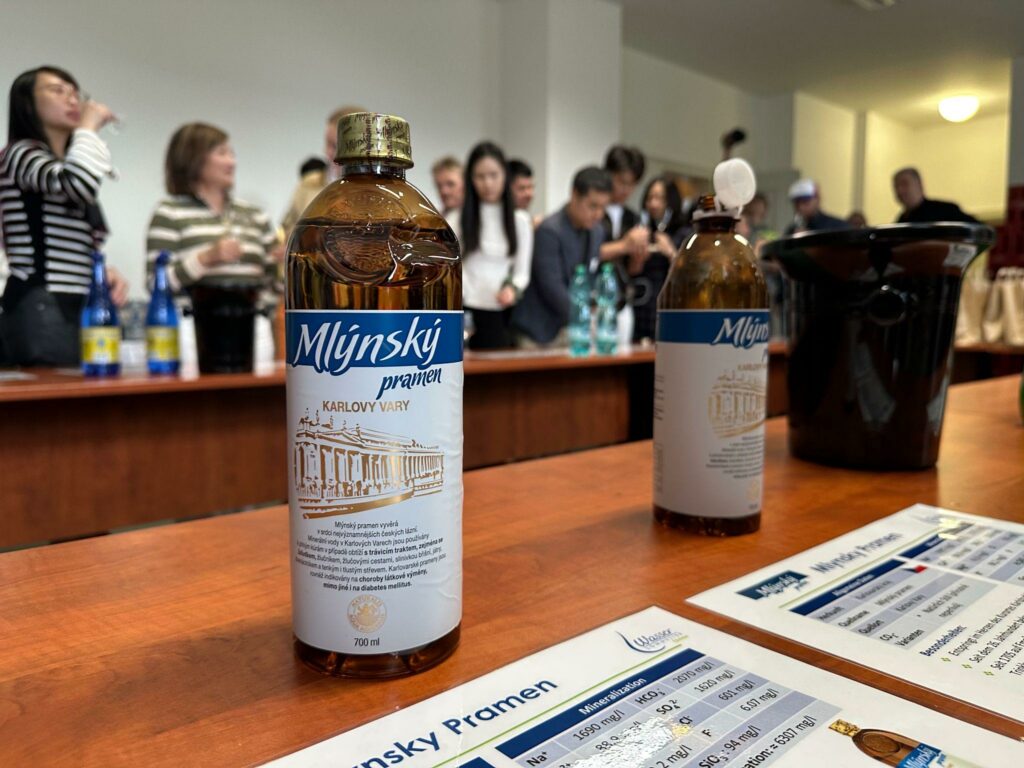
I really liked Mlýnský Springs. I think my body is particularly attracted to salty waters because I don’t retain liquids very well. The Mlýnský Springs were discovered in the sixteenth century and were originally used for bathing. It has been used for drinking cures since 1705 on the recommendation of Professor Friedrich Hoffman.
Mlýnský Springs
Rating: ★★★★☆
mg/L
Sodium: 1,690
Magnesium: 43.9
Calcium: 88.9
Chloride: 601
Sulfates: 1,620
Hydrogen carbonate: 2,070
Potassium: 88.2
Fluoride: 6.07
Silicic acid: 94
I was not a big fan of Rudolfův Pramen because it felt unbalanced. Otherwise of low minerality, it had way too much hydrogen carbonate. Also, it is sort of yellow because of iron sediments.
Rudolfův Pramen
Rating: ★☆☆☆☆
mg/L
Sodium: 86.1
Magnesium: 138
Calcium: 282
Chloride: 42.7
Sulfates: 118
Hydrogen carbonate: 1,590
Iron: 14.1
Silicic acid: 114
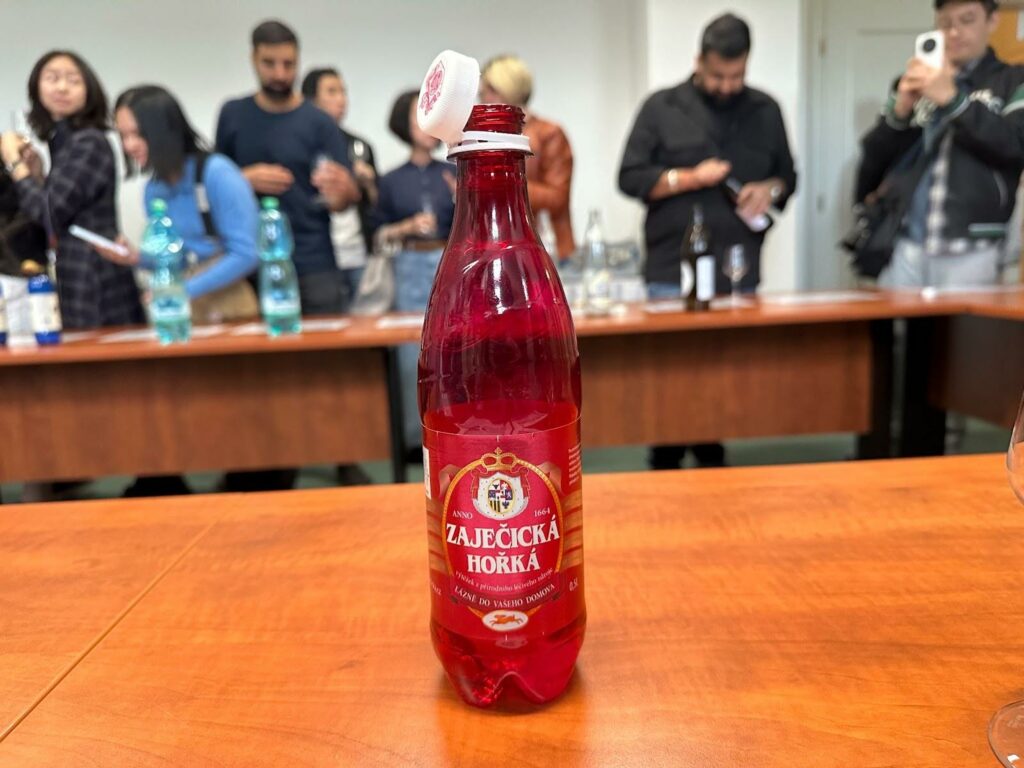
Last but not least, Zaječická Hořká, the most intense of them all. As the red bottle indicates, this is a water that’s hellish. It’s hard to swallow. Too many sulfates! Also, the high level of magnesium turns this mineral’s usual sweetness incredibly bitter. Its intensity makes for a fun gag, though, and everyone took videos of themselves tasting it. This water is not for daily consumption and is legally considered medicinal water. In Eastern Europe it is sometimes prescribed by doctors.
Zaječická Hořká
Rating: ★☆☆☆☆
mg/L
Sodium: 1,550
Magnesium: 5,260
Calcium: 487
Chloride: 279
Sulfates: 23,100
Hydrogen carbonate: 2,590
Lithium: 4.42
Iodine: 0.778
***
After the tasting, it was time for a group photo and a series of PowerPoint presentations by members of the union. The most interesting was by one of the French members of the Danone Group about current pollutants in municipal tap water in Europe—from pesticides to pharmaceuticals and PFAS—and how to protect natural springs so they remain free from these contaminants. Good news for Evian fans out there: its source is still clean.
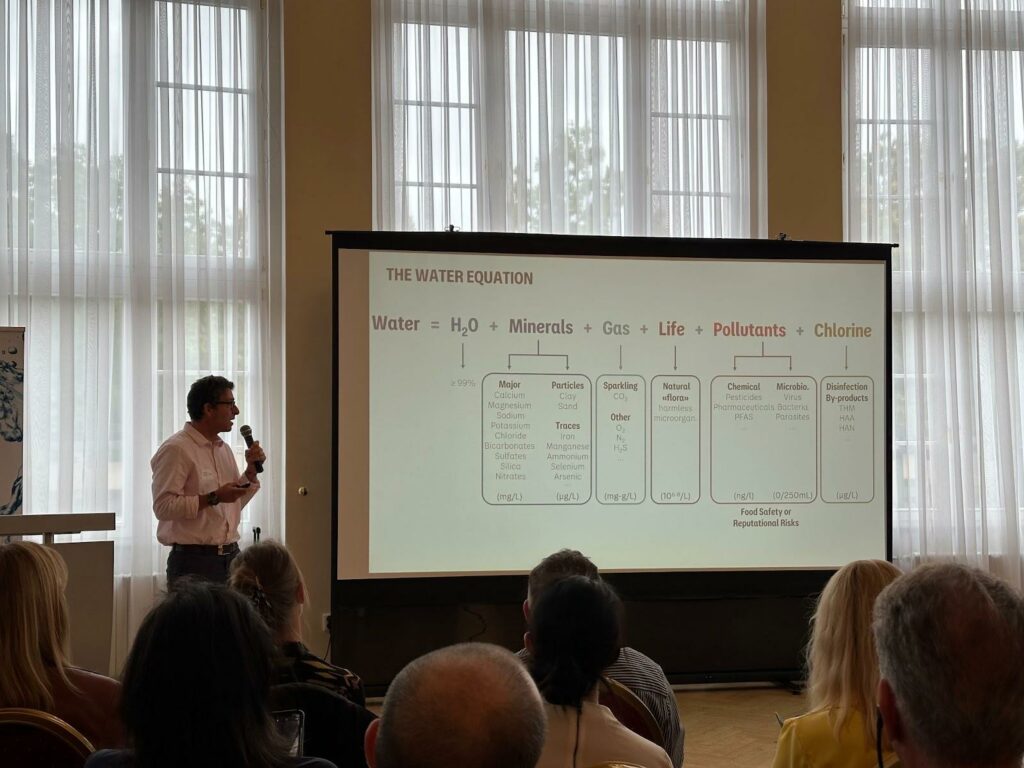
The rest of the presentations were soporific. I got distracted wondering if anyone was having an affair and, if so, how corporate people flirt with one another. Do they compliment each other’s PowerPoints?
Once I found a polite moment to leave, I snuck out to downgrade to a more humble hotel down the mountain. Its first review on Google was “Rude, condescending personnel, Soviet style rooms, it felt like I got back to my worst childhood experiences in Soviet Union children camps.”
I enjoyed the walk there, and it was nice to be nonverbal among the trees. But I do love my colleagues. After freshening up in my little Soviet room, I hiked back to the Spa Hotel Imperial. In the bar, my classmates and I drank sake sourced by a Hong Kong spirits sommelier. The sweet taste of the sake came as a blessing after a day full of water. We had dinner, got a little tipsy, and by midnight, that morning’s quarrel was water under the bridge.
News
Berita Teknologi
Berita Olahraga
Sports news
sports
Motivation
football prediction
technology
Berita Technologi
Berita Terkini
Tempat Wisata
News Flash
Football
Gaming
Game News
Gamers
Jasa Artikel
Jasa Backlink
Agen234
Agen234
Agen234
Resep
Download Film
Gaming center adalah sebuah tempat atau fasilitas yang menyediakan berbagai perangkat dan layanan untuk bermain video game, baik di PC, konsol, maupun mesin arcade. Gaming center ini bisa dikunjungi oleh siapa saja yang ingin bermain game secara individu atau bersama teman-teman. Beberapa gaming center juga sering digunakan sebagai lokasi turnamen game atau esports.