Samsung had a rough time earlier this year. Early complaints about the Samsung Galaxy S26 Ultra’s Privacy Display raised concerns among potential buyers.
Things got worse when Samsung clarified that the phone uses an 8-bit display rather than the 10-bit display previously touted in product briefings.
There is reason to be concerned. It’s not a total disaster, and you may decide the benefits outweigh the costs. However, Samsung’s difficulties and the Galaxy S26 Ultra’s screen issues may sway your buying decision.
After using the Galaxy S26 Ultra and Galaxy S25 Ultra side by side, I can see why buyers are nervous.
The Privacy Display isn’t as amazing as I expected
Not everything was obscured

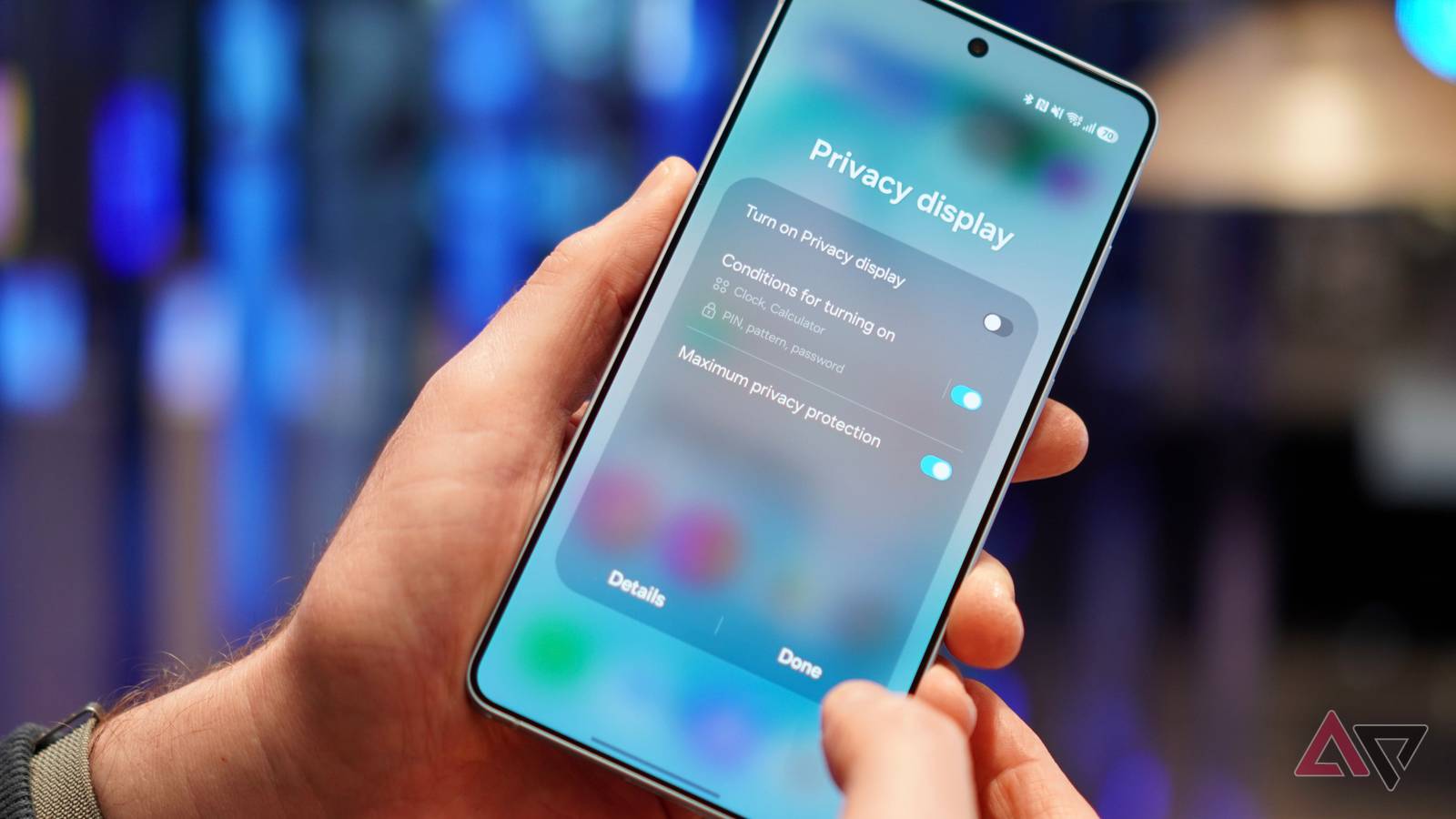
I started playing with the Privacy Display settings as soon as I finished setting up my Galaxy S26 Ultra. The technology sounds impressive, and I was curious to see how it performed in real-world testing. What I got was a bit of a surprise.
When I turned it on, the Privacy Display feature made the screen noticeably dimmer. It’s almost as if the phone dims before the screen times out, and I didn’t like it.
I’m not going to trash the Galaxy S26 Ultra’s display.
You may not mind a muted display, especially if you value privacy. However, it’s not a set-it-and-forget-it feature that I’ll leave on all the time.
Thankfully, Samsung lets me choose which apps get the privacy feature. I decided to use it on WhatsApp so the group chat’s sacred secrets can be protected.
On the standard privacy setting, I could read text from the side, at a fairly steep angle. It’s not perfectly clear, but I could make it out. I had to turn on the maximum setting for the Privacy Display, and then I couldn’t read anything.
If you use the Privacy Display to protect passwords and banking information, make sure you enable maximum privacy.
Overall, display quality has changed
Turns out the pixels make a difference

I’m not going to trash the Galaxy S26 Ultra’s display. It’s still a beautiful panel, with vibrant colors. However, I noticed the hues are slightly more muted than on the Galaxy S25 Ultra.
This may be by design, since Samsung has pushed more natural tones before. I set both vividness sliders to max, and the S25 Ultra looks more saturated.
You might be fine with that, and in a vacuum (without the two sitting next to each other), you probably won’t notice. It wouldn’t sway my buying decision, especially if Samsung intends it that way.
However, if it’s about the privacy features, you’ll need to decide whether to upgrade to a Galaxy S26 Ultra or stick with your older Galaxy a bit longer.
I’m talking in the margins, and you have to nitpick to see the difference. It wouldn’t keep me from buying a Galaxy S26 Ultra.
The viewing angles are also different between the two phones. Even with the Privacy Display off, the Galaxy S26 Ultra dims at an angle, while the Galaxy S25 Ultra remains vibrant.
Some users who are sensitive to PWM flicker report headaches after extended use of the Galaxy S26 Ultra. This is all anecdotal.
However, if you’re sensitive to display flicker, you may want to spend time with a Galaxy S26 Ultra in a store before buying.
Samsung can’t decide if it’s 8-bit or 10-bit
Plenty of display confusion

The display color-depth issue is a bizarre goal for a company like Samsung. In briefings, company representatives claimed that all three new Galaxy S26 devices featured 10-bit displays.
In reality, they’re only 8-bit displays, with software simulating a 10-bit experience that reduces banding and other issues. I can’t testify to any of that, as my eyes aren’t sensitive enough.
I also don’t think Samsung did it intentionally, but it pulls back the curtain on how large corporations operate. So many people and departments are involved that things like this get lost.
Still, it’s not an excuse, and some people pre-ordered a Galaxy S26 Ultra thinking it had a true 10-bit panel. Samsung has to make that right.
Most won’t notice a difference and will accept it as a beautiful display. But if you need a certain color depth for work, or you are an enthusiast who wants it, you bought the phone under false pretenses.
It’s not a bad display by any means, but Samsung has some cleanup to do
Samsung took a few knocks, and they were deserved.
I don’t think the Privacy Display is a reason not to buy the Galaxy S26 Ultra, but it needs some tweaking. That’s to be expected with a new feature, and because some of it is software-controlled, updates can help.
As for the 8-bit panel, it’s a binary issue. Either you focus on it and count on it, or you’ll never notice.
Samsung has things to answer for and will need to make it right, but don’t let anyone tell you the Galaxy S26 Ultra doesn’t have a gorgeous display.
PakarPBN
A Private Blog Network (PBN) is a collection of websites that are controlled by a single individual or organization and used primarily to build backlinks to a “money site” in order to influence its ranking in search engines such as Google. The core idea behind a PBN is based on the importance of backlinks in Google’s ranking algorithm. Since Google views backlinks as signals of authority and trust, some website owners attempt to artificially create these signals through a controlled network of sites.
In a typical PBN setup, the owner acquires expired or aged domains that already have existing authority, backlinks, and history. These domains are rebuilt with new content and hosted separately, often using different IP addresses, hosting providers, themes, and ownership details to make them appear unrelated. Within the content published on these sites, links are strategically placed that point to the main website the owner wants to rank higher. By doing this, the owner attempts to pass link equity (also known as “link juice”) from the PBN sites to the target website.
The purpose of a PBN is to give the impression that the target website is naturally earning links from multiple independent sources. If done effectively, this can temporarily improve keyword rankings, increase organic visibility, and drive more traffic from search results.