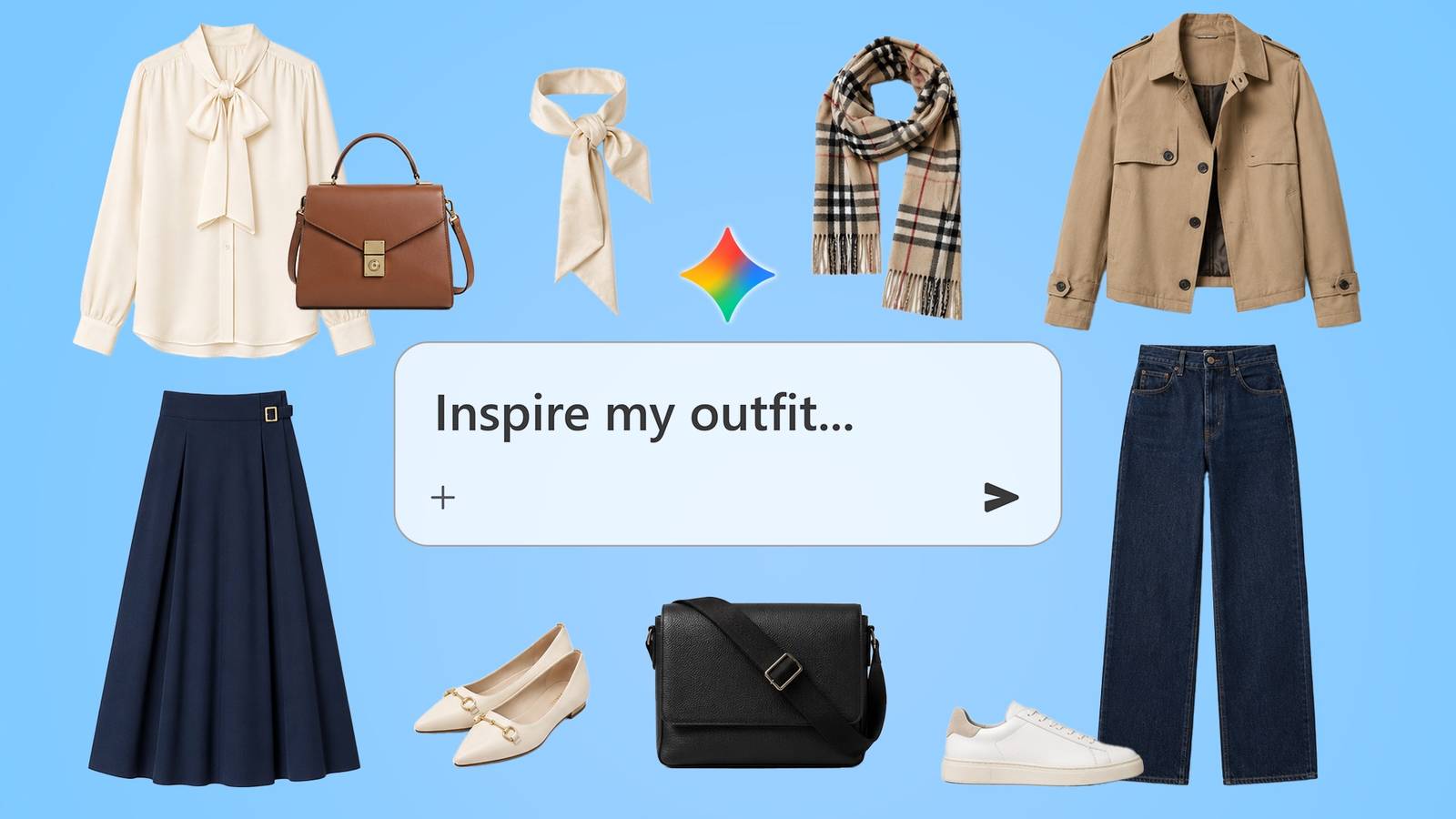
As I approach my thirties, my wardrobe is evolving with me. My interests are more mature and expensive, though I still love standing out and experimenting with unusual combinations.
I get inspiration from Pinterest and Gemini, where I remix ideas and play fashion designer from my Android phone.
Recently, I needed an outfit for a live string quartet and classical music night. The two are helping me piece together the right look for an elegant evening.
Quiz
Google Gemini
Trivia Challenge
From Bard to bold redesigns — how well do you know Google’s AI assistant and its evolving look?
OriginsDesignFeaturesBrandingAI Tech
What was the name of Google’s AI chatbot before it was rebranded as Gemini?
Correct! Google Bard launched in March 2023 and was rebranded to Gemini in February 2024. The name change reflected a shift to align the product with Google’s underlying Gemini large language model family.
Not quite — the answer is Google Bard. Bard launched in early 2023 as Google’s answer to ChatGPT, before being rebranded to Gemini in February 2024 to better reflect the AI model powering it.
The Gemini logo is characterized by a distinctive star-like shape. How many points does the Gemini logo mark have?
Correct! The Gemini logo features a four-pointed star that resembles a shimmering light or sparkle. This shape has become one of Google’s most recognisable AI iconography symbols across its product suite.
Not quite — the Gemini logo uses a four-pointed star shape. It’s designed to evoke a glimmering light or spark, and you’ll spot this same motif used across Google’s various AI-powered features throughout its apps.
What potentially controversial design change was Gemini recently spotted testing in its interface?
Correct! Gemini was spotted testing a design that relocates the chat input bar from its traditional bottom position to the top of the screen. This is considered controversial because it breaks from the ergonomic thumb-friendly convention most mobile chat apps follow.
Not quite — the controversial design change being tested is moving the chat input bar from the bottom to the top of the screen. While it may aid discoverability, many users find bottom-placed inputs more comfortable to reach on modern large-screen phones.
Which of the following best describes the Gemini model tier designed for the most complex, high-capability tasks?
Correct! Gemini Ultra is Google’s most powerful model tier, built for highly complex reasoning and multimodal tasks. It sits at the top of a tiered family that also includes Gemini Pro and the lightweight Gemini Nano.
Not quite — Gemini Ultra is the top-tier model. Google structured its Gemini family into tiers: Nano for on-device tasks, Pro for everyday use, and Ultra for the most demanding applications requiring deep reasoning and multimodal understanding.
Which Google Workspace app was one of the first to deeply integrate Gemini AI assistance directly into its interface?
Correct! Gmail was among the first Google Workspace apps to receive deep Gemini integration, offering features like email summarisation and AI-assisted reply drafting. This integration has since expanded across Docs, Sheets, and more.
Not quite — Gmail was one of the earliest and deepest Gemini integrations in Google Workspace. Features like smart summarisation and Help Me Write made it a flagship showcase for what Gemini could do inside everyday productivity tools.
In what month and year did Google officially rebrand Bard to Gemini?
Correct! Google officially rebranded Bard to Gemini in February 2024. The rebrand coincided with the launch of the dedicated Gemini mobile app and the introduction of the Gemini Advanced subscription tier powered by Ultra 1.0.
Not quite — the rebrand happened in February 2024. Google used the occasion to simultaneously launch the standalone Gemini app for Android and introduce Gemini Advanced, a premium subscription offering powered by the Ultra 1.0 model.
What is the primary color associated with the Gemini app icon and branding?
Correct! Gemini’s branding uses a flowing multicolour gradient blending blues, purples, and teals, evoking a cosmic, intelligent feel. This differentiates it visually from Google Assistant’s warmer colour palette and signals its AI-first identity.
Not quite — Gemini uses a multicolour gradient of blues, purples, and teals. The iridescent, almost galaxy-like quality of the palette was a deliberate design choice to set Gemini apart from previous Google AI products and give it a premium, futuristic feel.
What is the name of the lightweight Gemini model variant designed to run directly on-device, including on Android smartphones?
Correct! Gemini Nano is the on-device model designed to run locally on Android hardware without requiring a cloud connection. It powers features like Summarise in Recorder and Smart Reply, and was first deployed on Pixel 8 devices.
Not quite — it’s Gemini Nano. This compact model is optimised to run entirely on-device, meaning it can function without an internet connection. It debuted on the Pixel 8 series and enables privacy-friendly AI features that process data locally on your phone.
Your Score
/ 8
Thanks for playing!
Gemini is my fairy godmother
It brought my Pinterest wishlist to life
I have loved orchestral music since I was little. Although I mostly listen to contemporary names like Ludovico Einaudi and Yiruma, I also enjoy classical canonical composers.
The sounds feed into my love for wild philosophical poetry, especially the melancholic and wistful tunes. You could say I’m a yearner for a time period I’ve, regrettably, never lived in.
When I saw the invitation poster for Candle and Strings’ debut in my city, I practically squealed for joy like a Bridgerton character invited to a ball.
This event had sold out nine shows in Lagos and was finally coming to the capital. There was no missing it, so I quickly jumped on the pricey but worthwhile tickets.
As a DIY enthusiast who isn’t always hands-on but big on custom pieces, I texted my tailor on WhatsApp to make me a unique two-piece worthy of the occasion.
I am guilty of the delusion that Pinterest styles me when I really save things I never get around to wearing. But I rummaged through my evening-wear boards anyway and found several options.
It was hard to choose, so I sent them all to Gemini to help me narrow them down. Among them was a matching set designed by Maison Baghera.
It’s an emerging French label I have come to admire because of its commitment to sculptural drama and earth-toned color stories. I always prefer muted, flat colors for anything, and the brand reminds me of them.
Its first capsule collection is about to launch. So, I’m unofficially launching it alongside them. I wasted no time in sending my tailor the reference image.
It was a shot of a corset top with dramatic puffed sleeves. It was in a beige-cream tone, and paired with wide printed trousers in a red-and-white pattern.
I wanted the trousers to be puffier and the same color as the sleeves. Although I had a clear idea in my head, I still uploaded my reference image to Gemini and broke down the modifications one prompt at a time.
The drama with Nigerian tailors usually ends with what you ordered versus what you get, and you want to remove as much ambiguity as possible.
Otherwise, I would not consider having pieces sewn for a one-time event if I didn’t have a reliable tailor.
Replicating a visual reference and iterating on it with AI is not wrong if the result is a personal piece made for your own use.
But reproducing it at scale or selling it as the designer’s own counts as counterfeiting and copyright infringement.
I’d also crop out or blur any model’s face when feeding references into Gemini and focus on the garment. Using someone else’s likeness as an AI base without their consent is ethically and legally murky.
I recreated a potentially expensive look for under $50
It’s part of my growing timeless collection
Several iterations with Gemini produced the results I wanted, which I sent to my tailor. We settled on five yards of medium-to-heavyweight cotton canvas for the outfit, and I got a quote of $47 to buy and sew.
The material made the most sense for balloon trousers because of its weight and volume hold without stiffness. Plus, it drapes and doesn’t sit stiffly around the legs.
It was either that or using the jogger fabric initially recommended by the tailor. Though cheaper, it would be too soft to hold the desired shape.
According to Gemini, my outfit idea is an absolute showstopper. The reactions at the event will be the ultimate judge.
Gemini performs better with one clear instruction at a time when you attach images. It struggles to balance competing instructions simultaneously, so stacked prompts may produce distorted images.
So far, I’d say AI as a fashion tool dismantles elitist standards that make aspirational dressing feel out of reach. I can’t count how many times I’ve admired outfits, with my only barrier to acquiring them being money.
Cosplaying culture and thrifting are strangely unlikely allies that introduced me to the “fake it till you make it” school of dressing.
The goal may not be to own the exact piece but to capture its feeling by any means available to you. You can copy a celebrity look, or any ensemble, and iterate on it to fit your body and budget.
You can even upload pictures of fabrics you already own or are considering buying when unsure of how they work together.
I do it when two pieces are similar colors but have different textures, like matte cotton and shiny satin in the same cream tone.
Make bold fashion statements
Style is a personal language, and you can speak more of yours with less than you imagine. If you have not felt confident enough to experiment with clothes in your wardrobe, there are tools that make the process fun.
Google’s experimental Mixboard and Doppl are other ways I bring outfits to life beyond Pinterest and Gemini. They let me try on clothes virtually before buying them.
Any money invested in my appearance has since stopped feeling wasteful.
PakarPBN
A Private Blog Network (PBN) is a collection of websites that are controlled by a single individual or organization and used primarily to build backlinks to a “money site” in order to influence its ranking in search engines such as Google. The core idea behind a PBN is based on the importance of backlinks in Google’s ranking algorithm. Since Google views backlinks as signals of authority and trust, some website owners attempt to artificially create these signals through a controlled network of sites.
In a typical PBN setup, the owner acquires expired or aged domains that already have existing authority, backlinks, and history. These domains are rebuilt with new content and hosted separately, often using different IP addresses, hosting providers, themes, and ownership details to make them appear unrelated. Within the content published on these sites, links are strategically placed that point to the main website the owner wants to rank higher. By doing this, the owner attempts to pass link equity (also known as “link juice”) from the PBN sites to the target website.
The purpose of a PBN is to give the impression that the target website is naturally earning links from multiple independent sources. If done effectively, this can temporarily improve keyword rankings, increase organic visibility, and drive more traffic from search results.